


INTRO
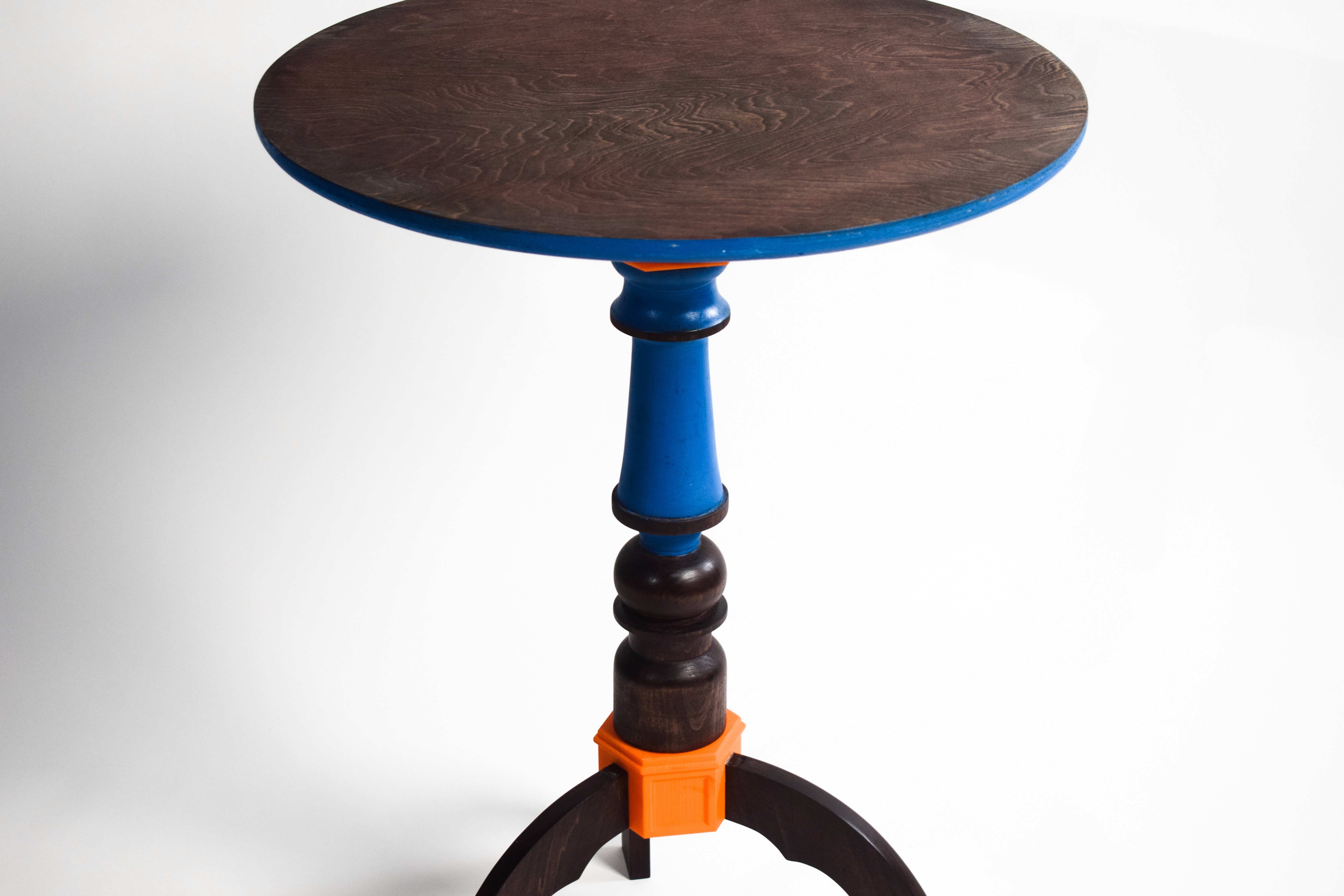
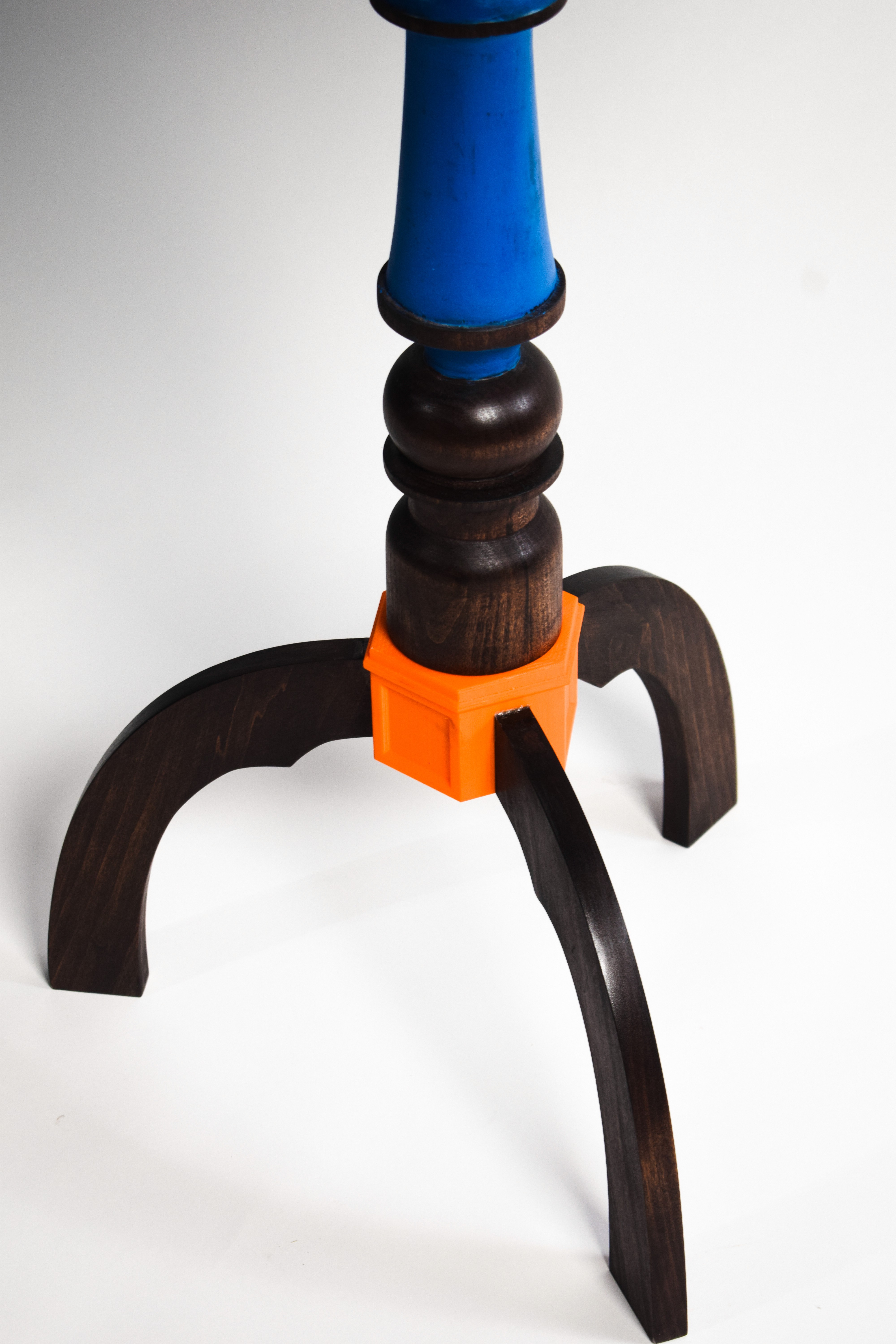
Inspired by German design and the shaker three-legged table, this project merges old and new fabrication methods to create a piece both elegant and mass-producible. Pieces are held together through friction and tension.
THE BRIEF
From a 8” by 60” by 1” length of poplar, design and construct a stool out of four rectilinear boards joined at right angles.
PROCESS
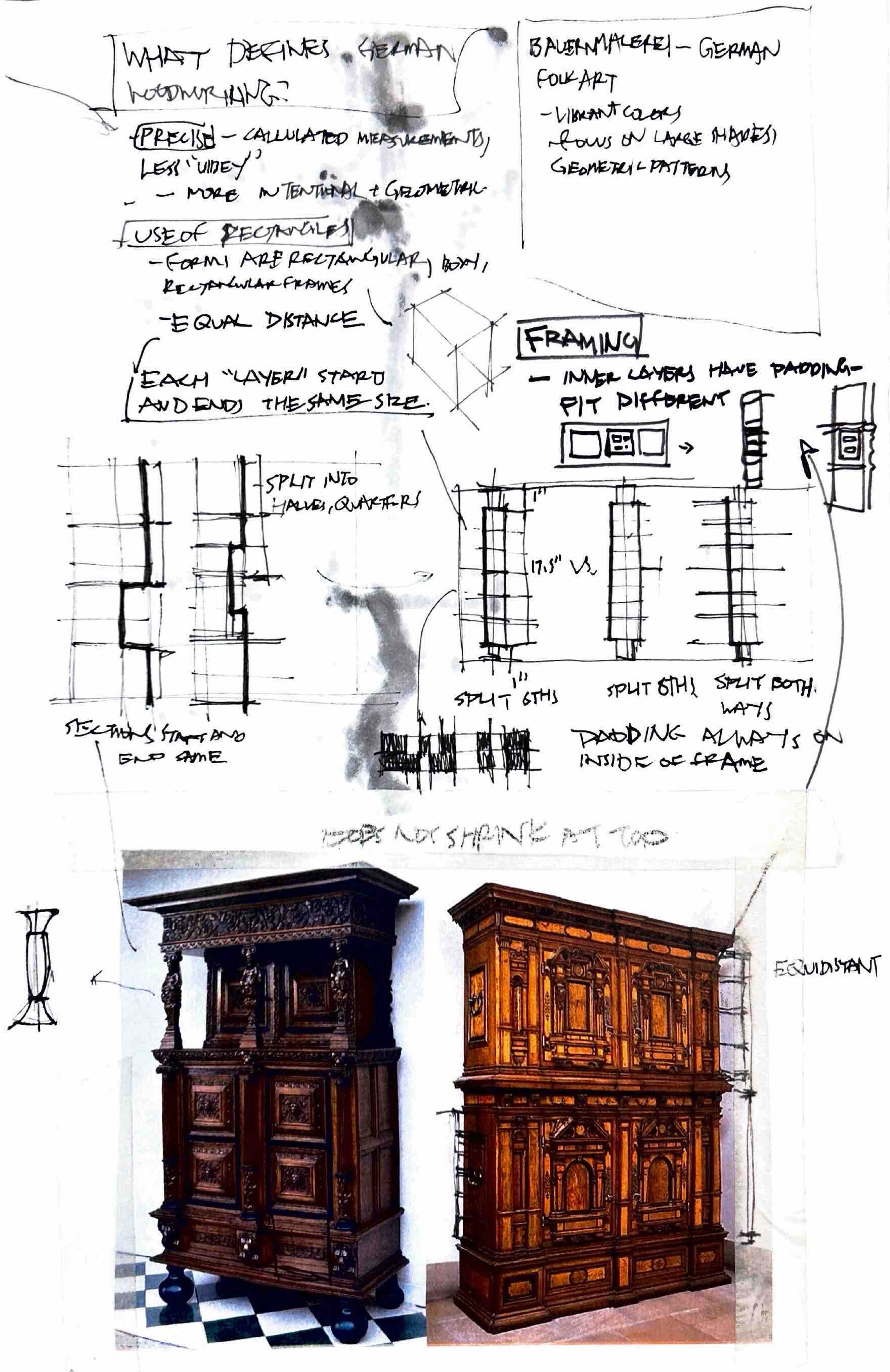
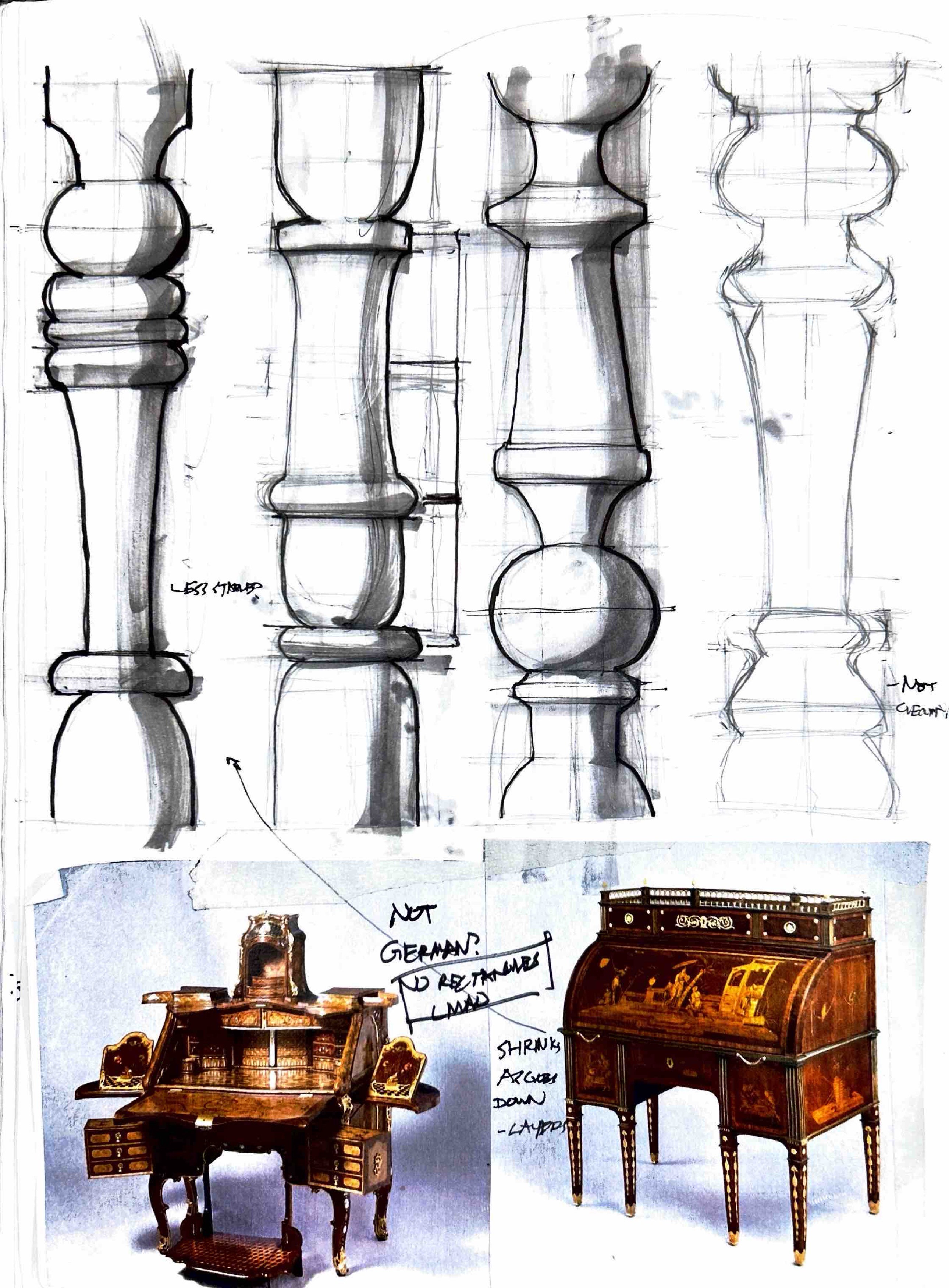
Inspiration
I wanted to pick a specific era of German design


Sketching
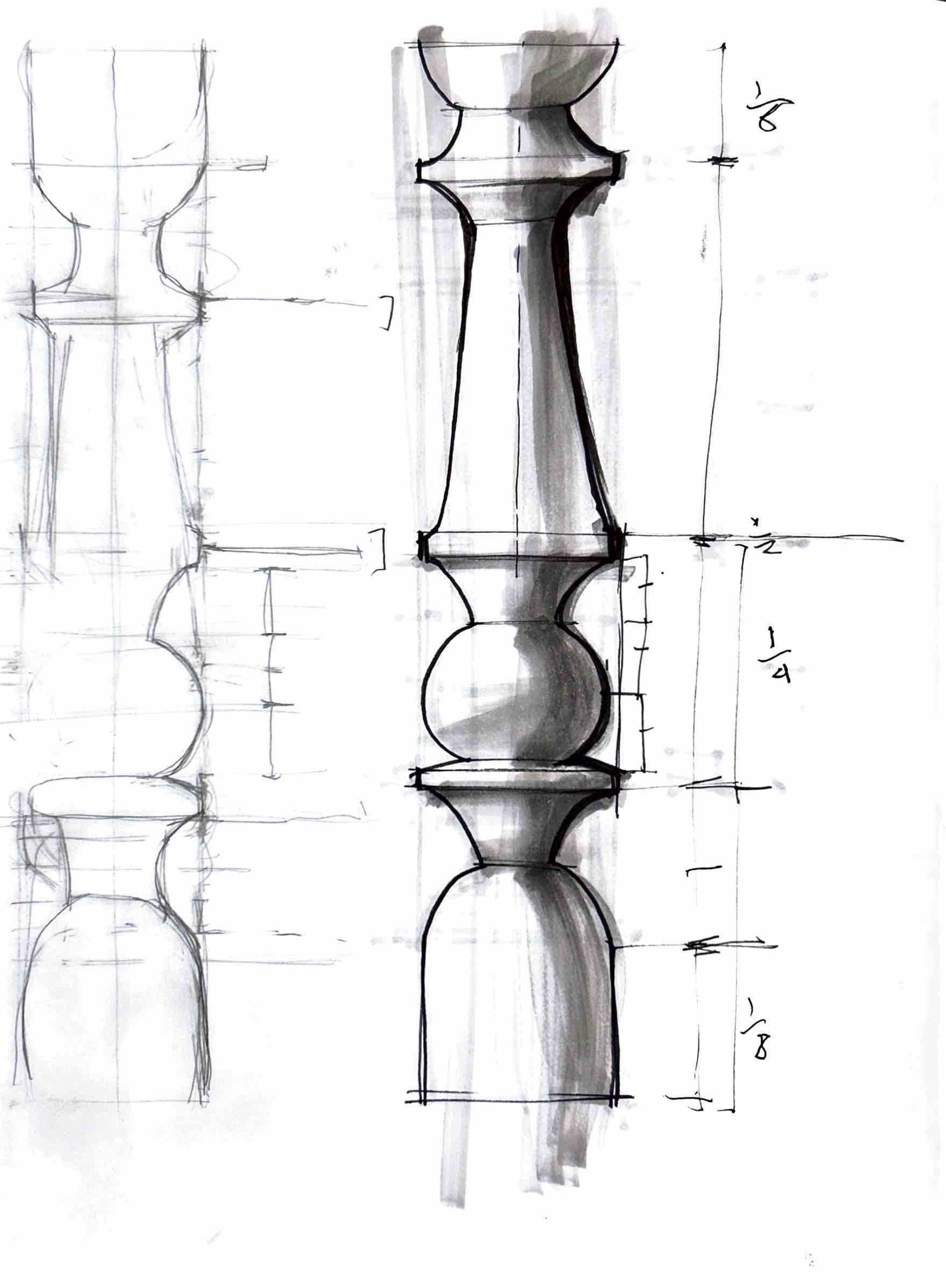
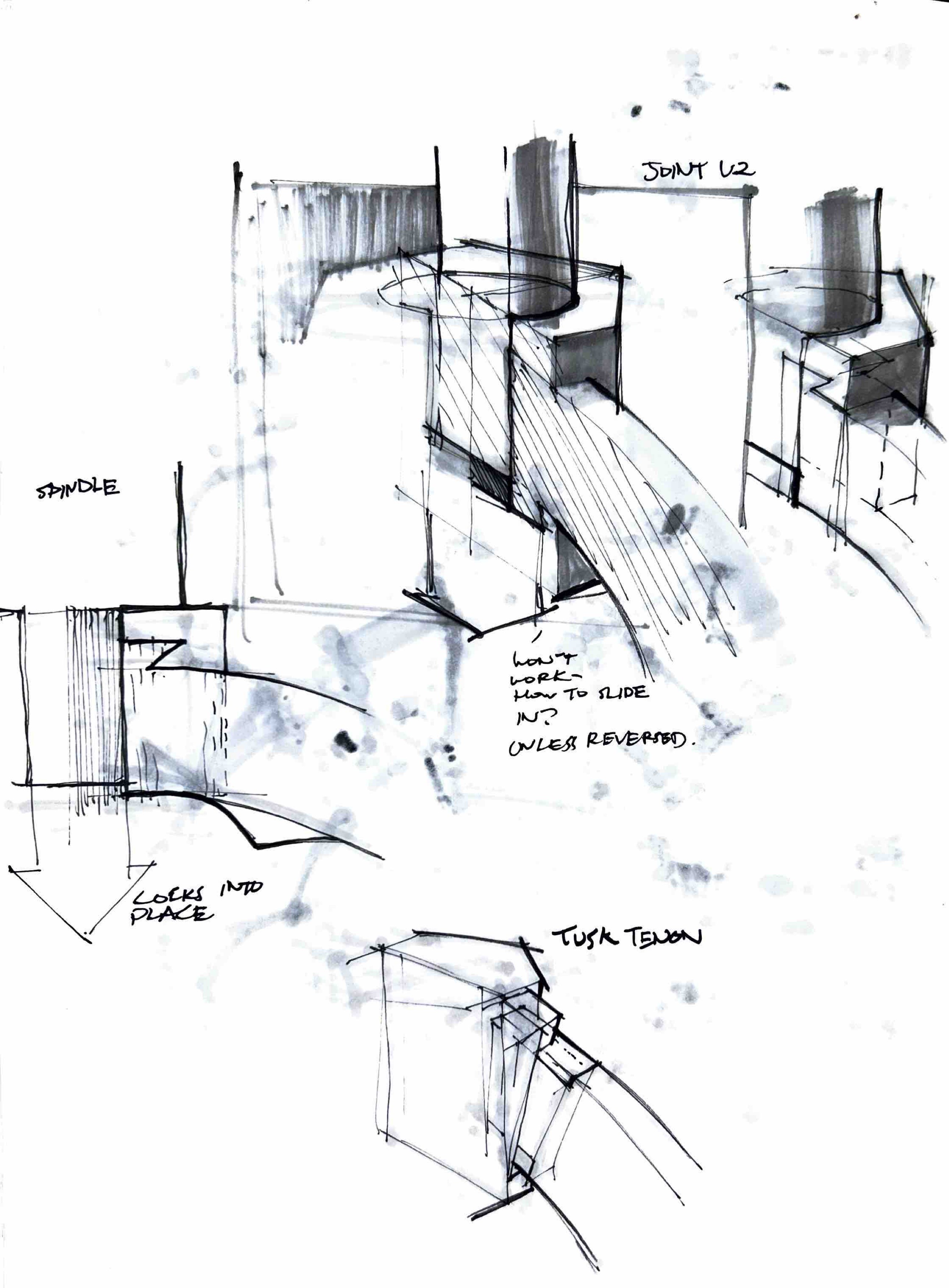
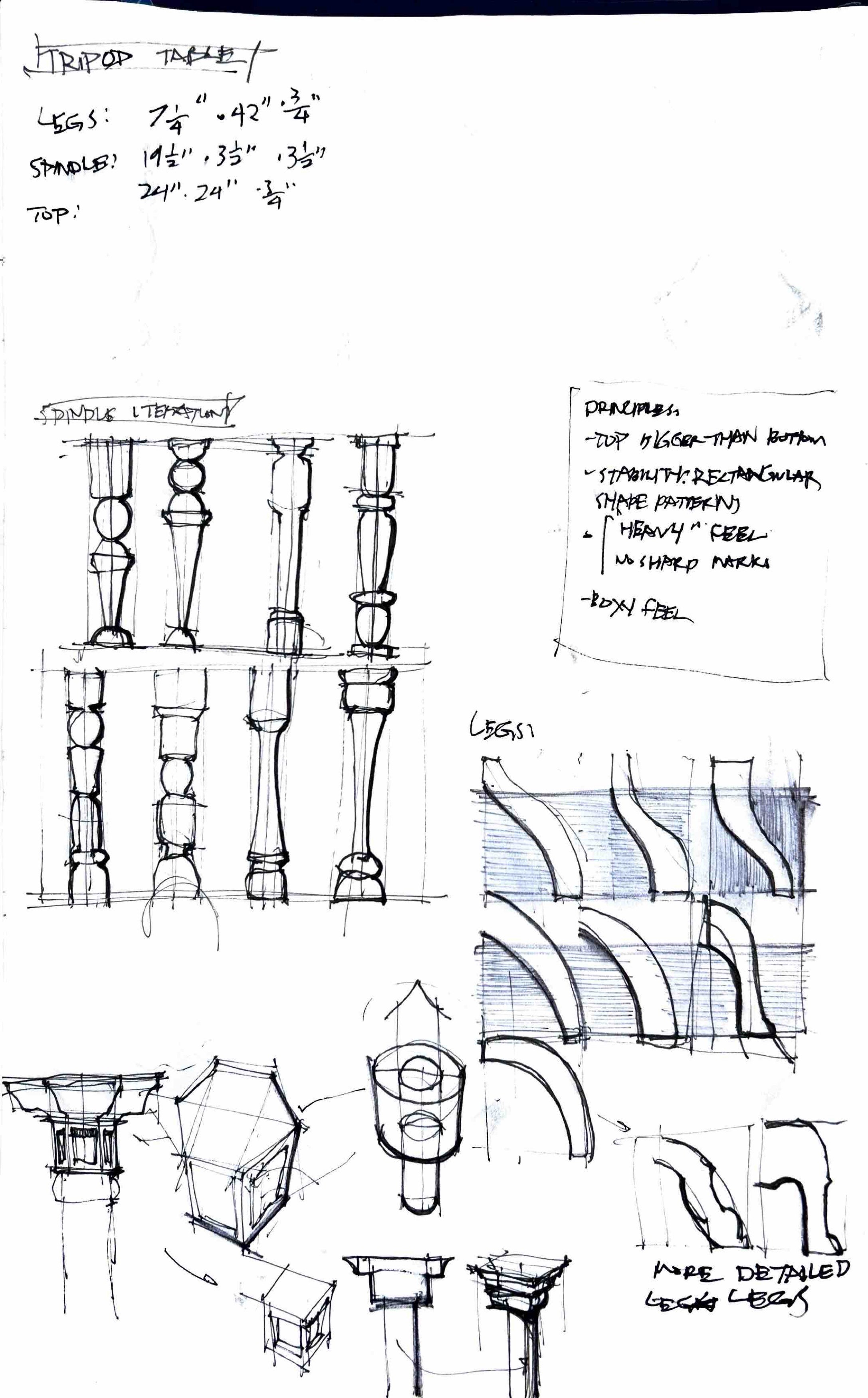
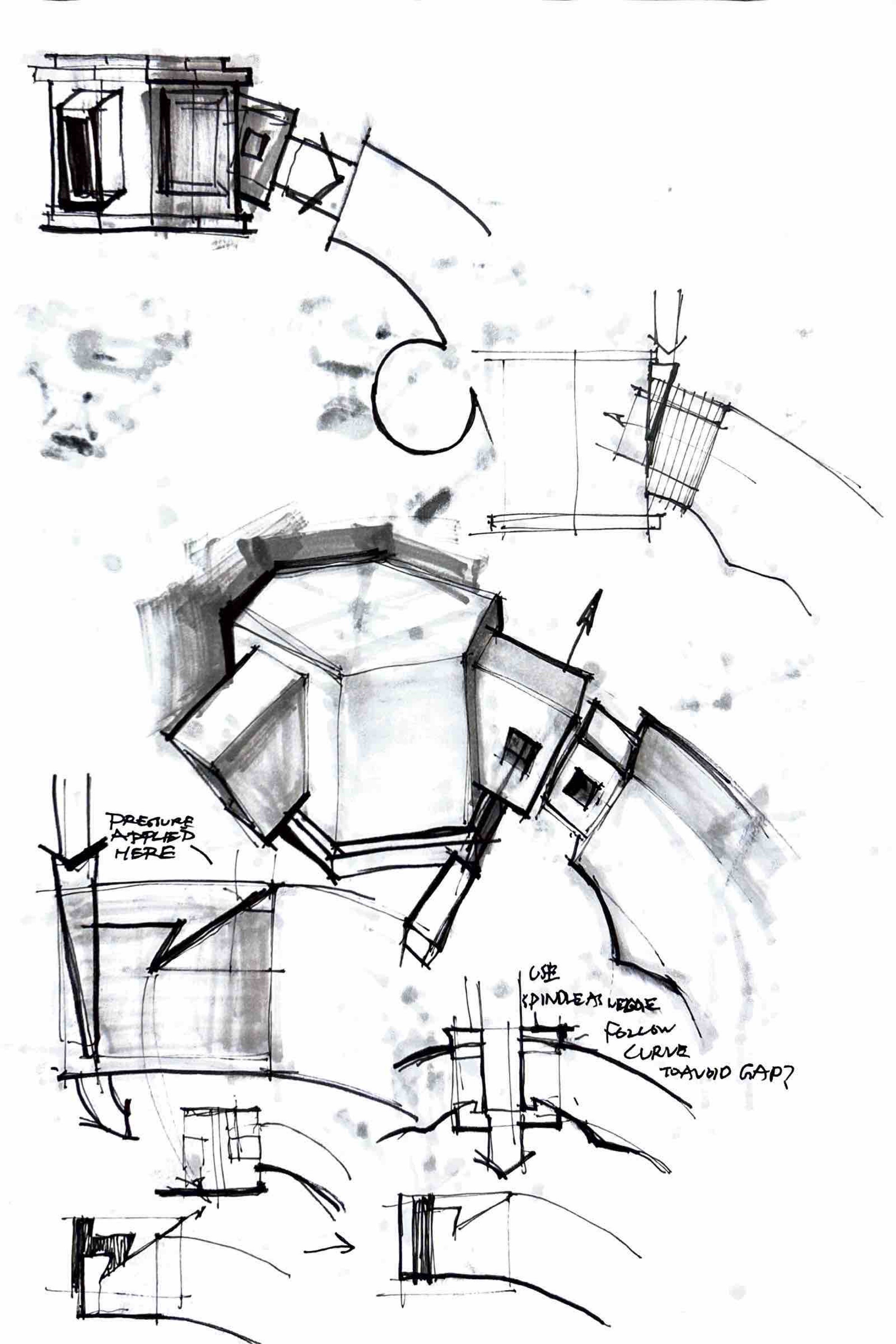
Paper sketching held a major role in planning out the joinery mechanisms and iterating without needing to commit to a single direction. The six-sided top and bottom connectors were thought out very early on, and I created a lot of the other parts to match.



Modeling
Each part was dimensioned on paper and translated to SolidWorks. As I started with the spindle, I spent the most time iterating on leg designs to match the overall form, eventually settling on a style that matched the Fachwerk of medieval German houses.


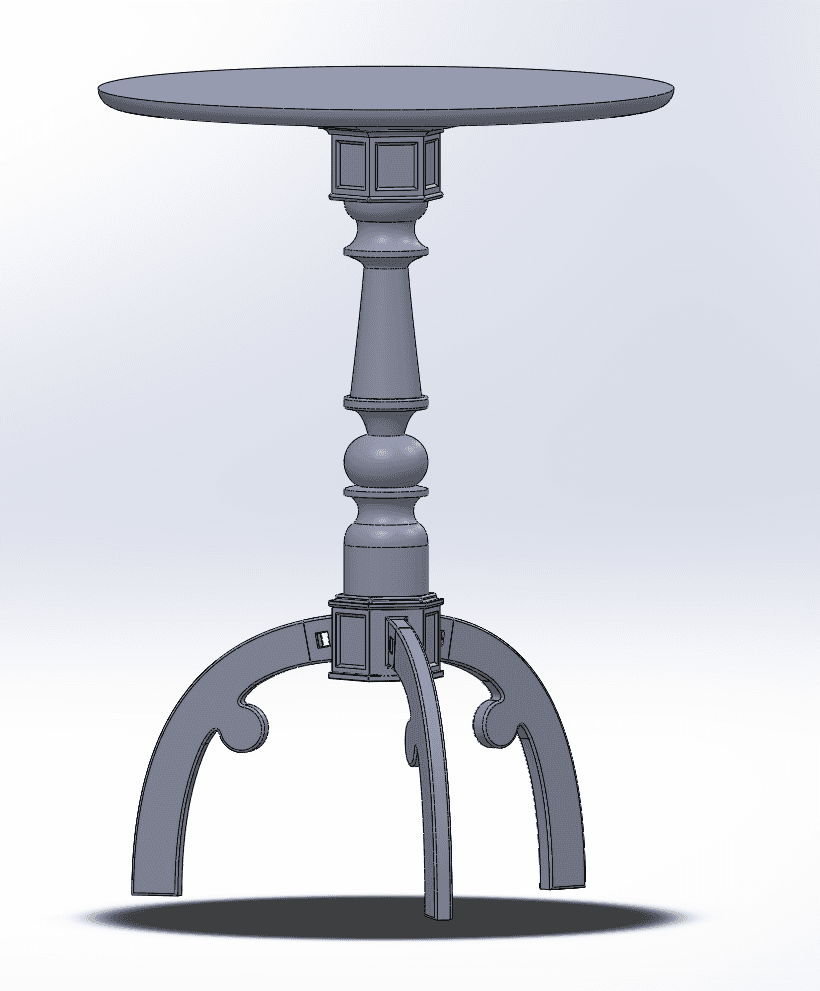
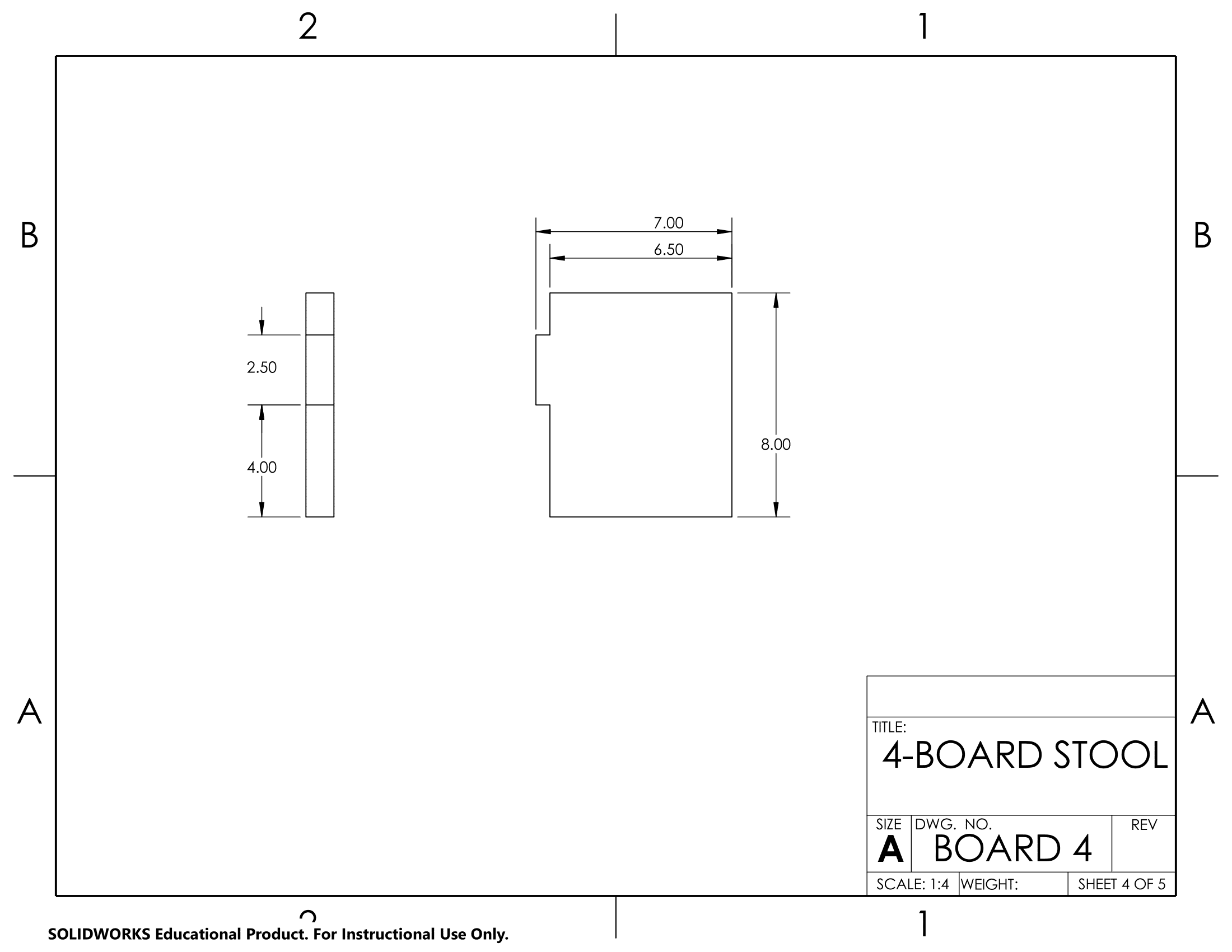
Renders
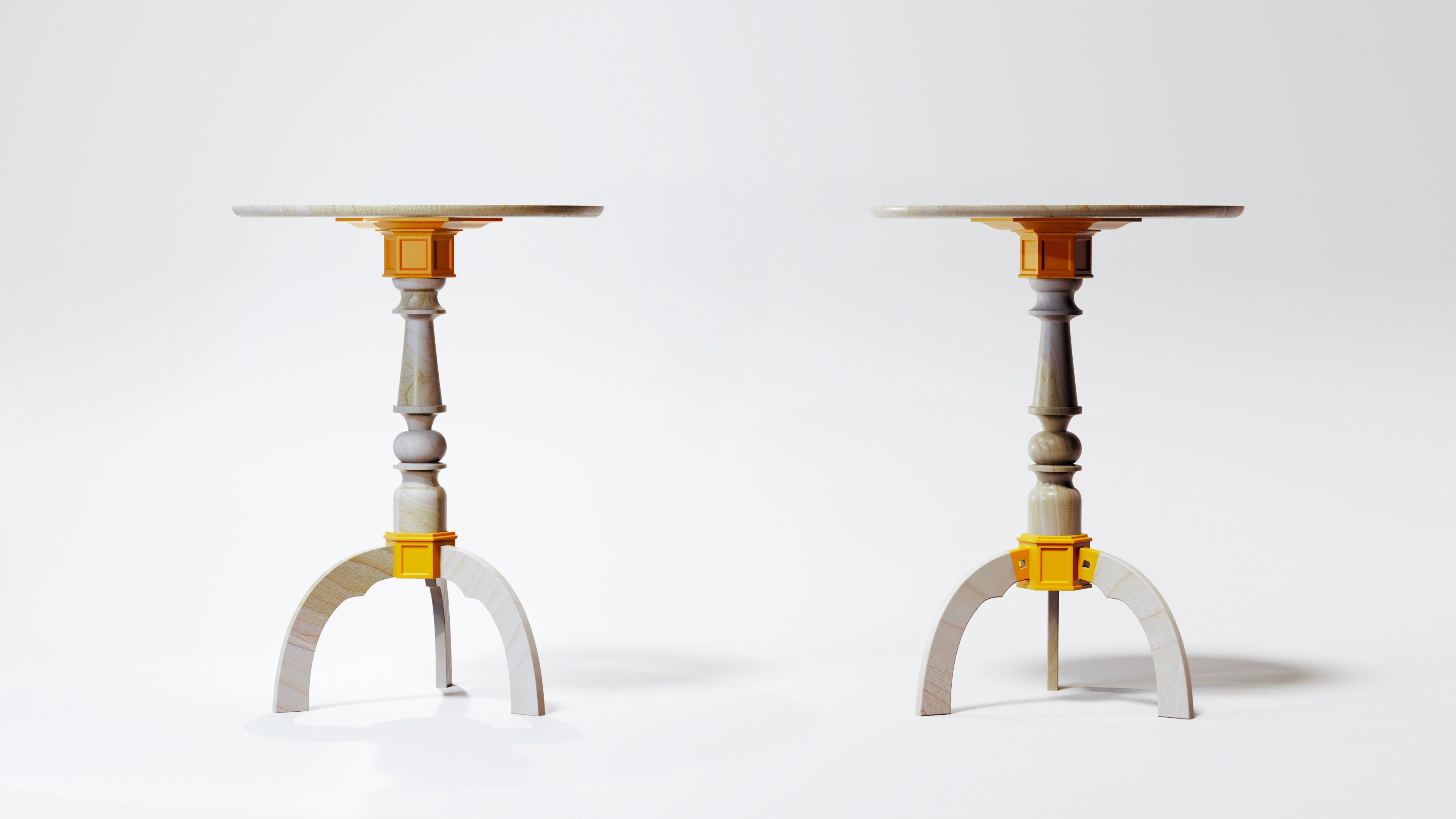
Done in Blender, edited in Lightroom.



Machining
Throughout the course of the project, I gained experience with the bandsaw, chop saw, jointer, planer, router, and drill press.
Affordances + Interactions
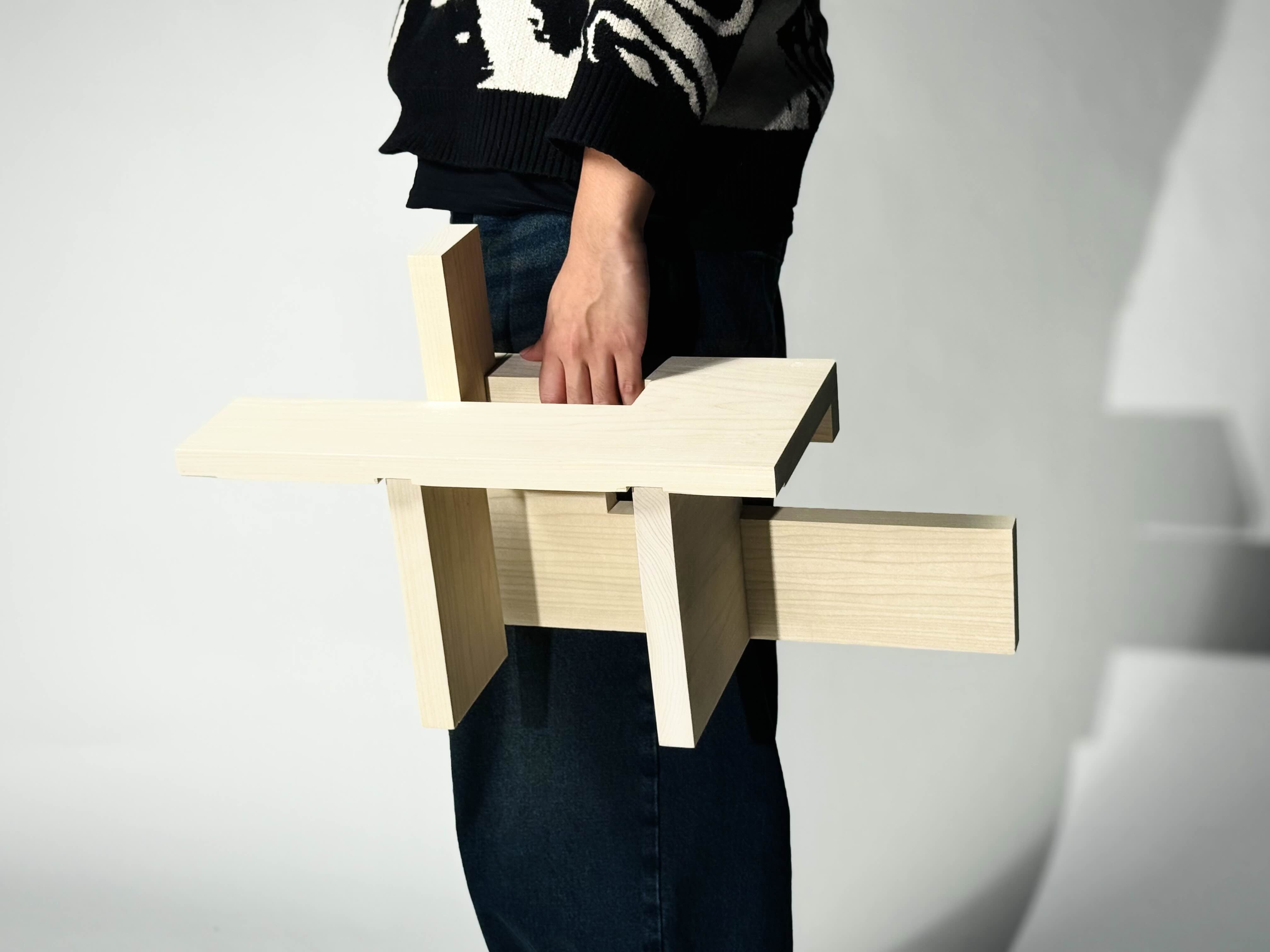
The stool's many loops suggest it is meant to be picked up and carried. Its horizontal nature encourages both forward leaning and sprawling.

REFLECTION
As my introduction to the machine shop, this project broadened my understandings of considerations for manufacturing and production. Details such as screw placement and joint types played a bigger role than I initially imagined, and gave me a greater respect for the intentionality behind each decision made in everyday objects. Decisions considering feasibility not just of idea, but of craft.
With more time, I would like to play with the proportions a bit more to get the stool slightly taller, and extend the backboard so it feels more thought out. Given the limited timeframe of the project, I am quite happy with how it turned out.
@Timothy Yang
ttimothyy24@gmail.com
YOU INTERESTED?