INTRO
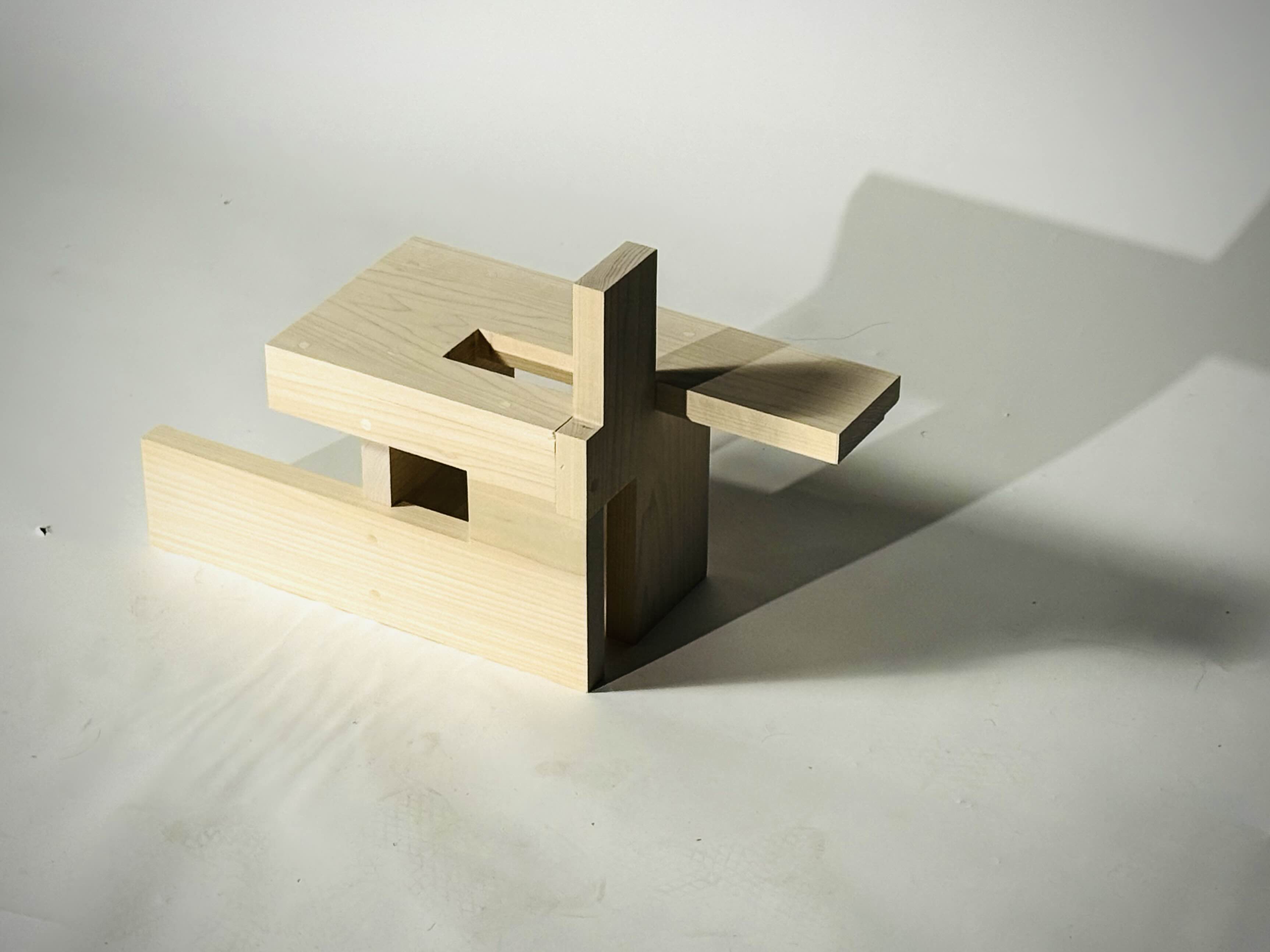
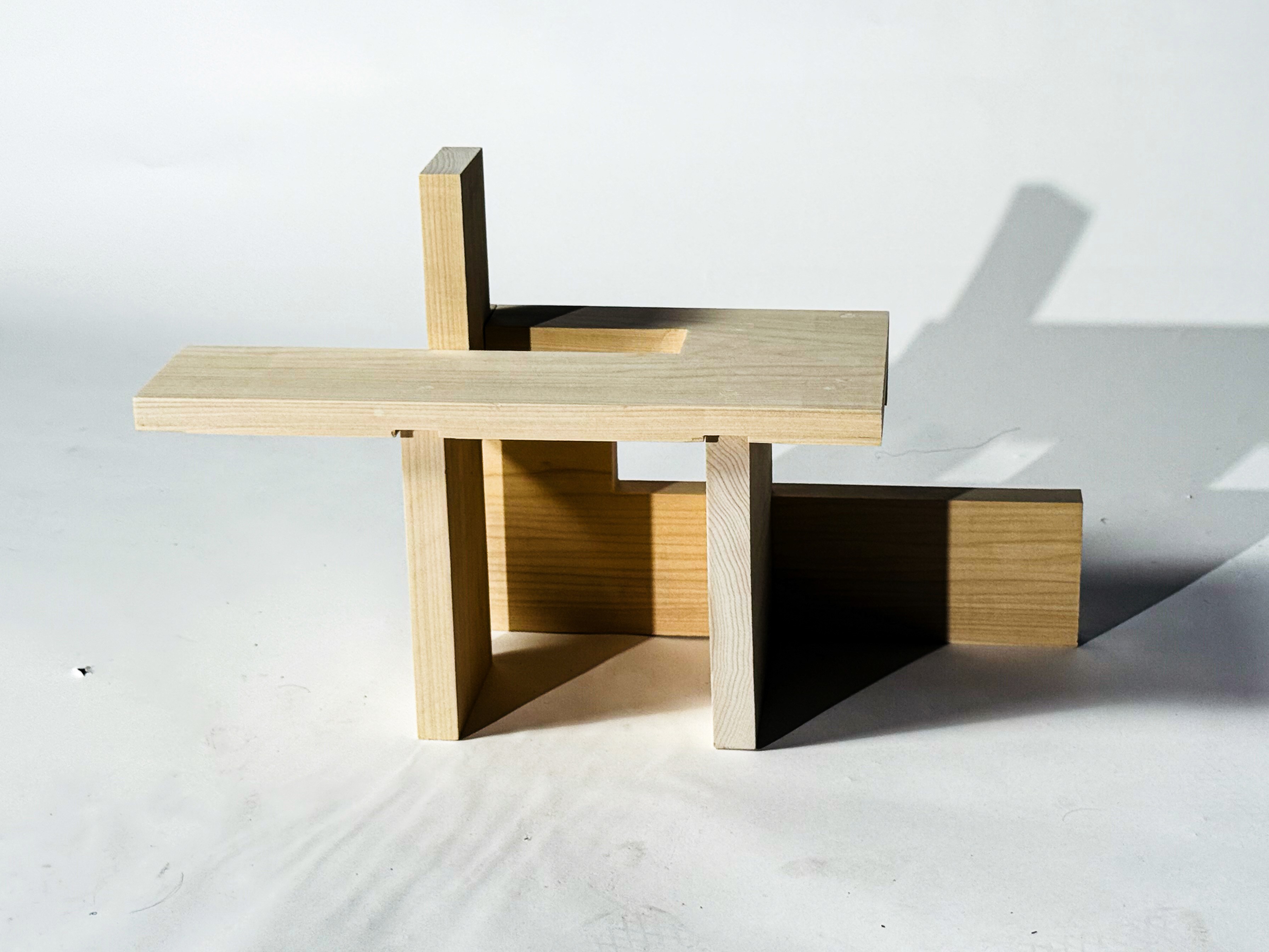
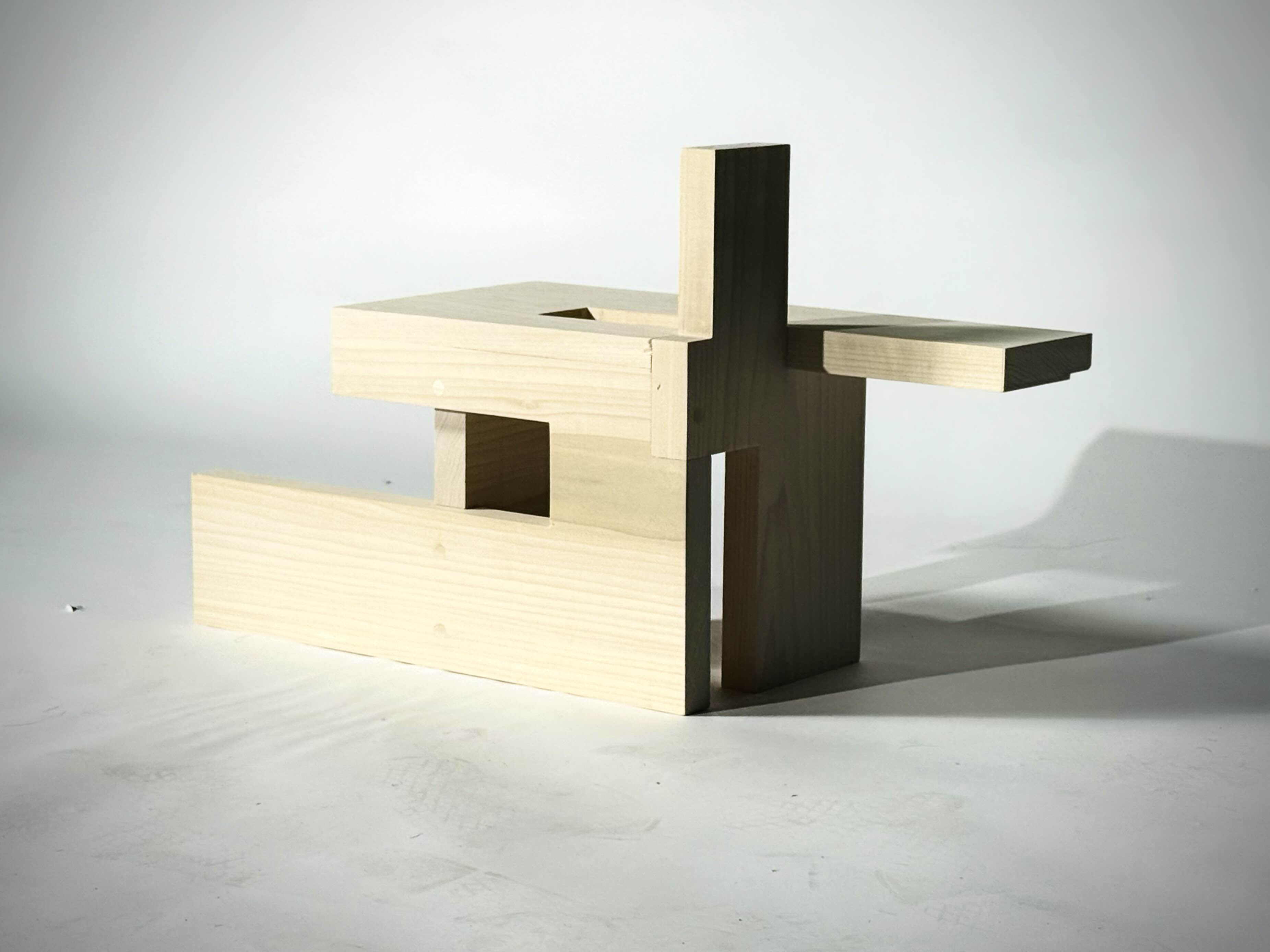
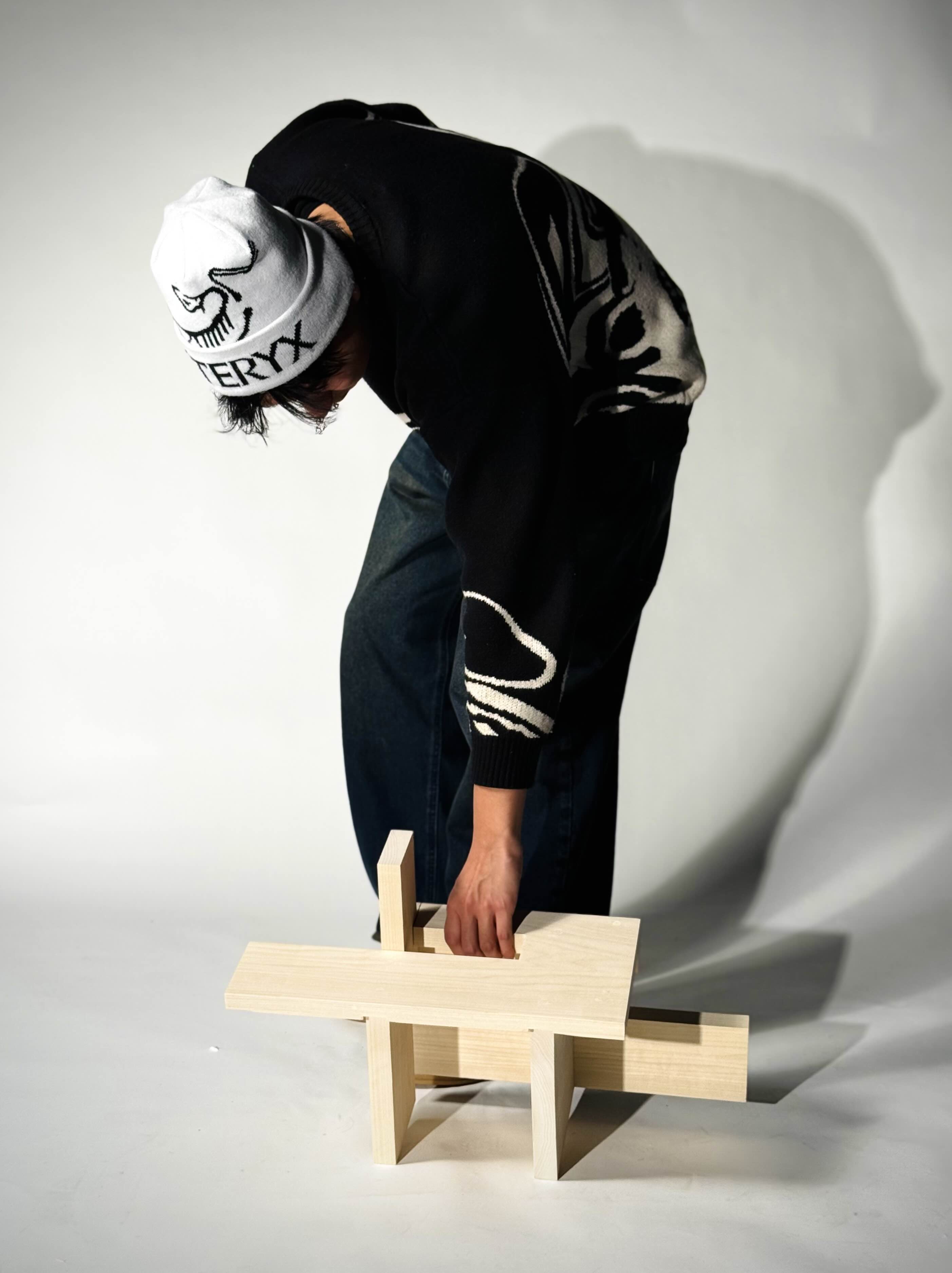
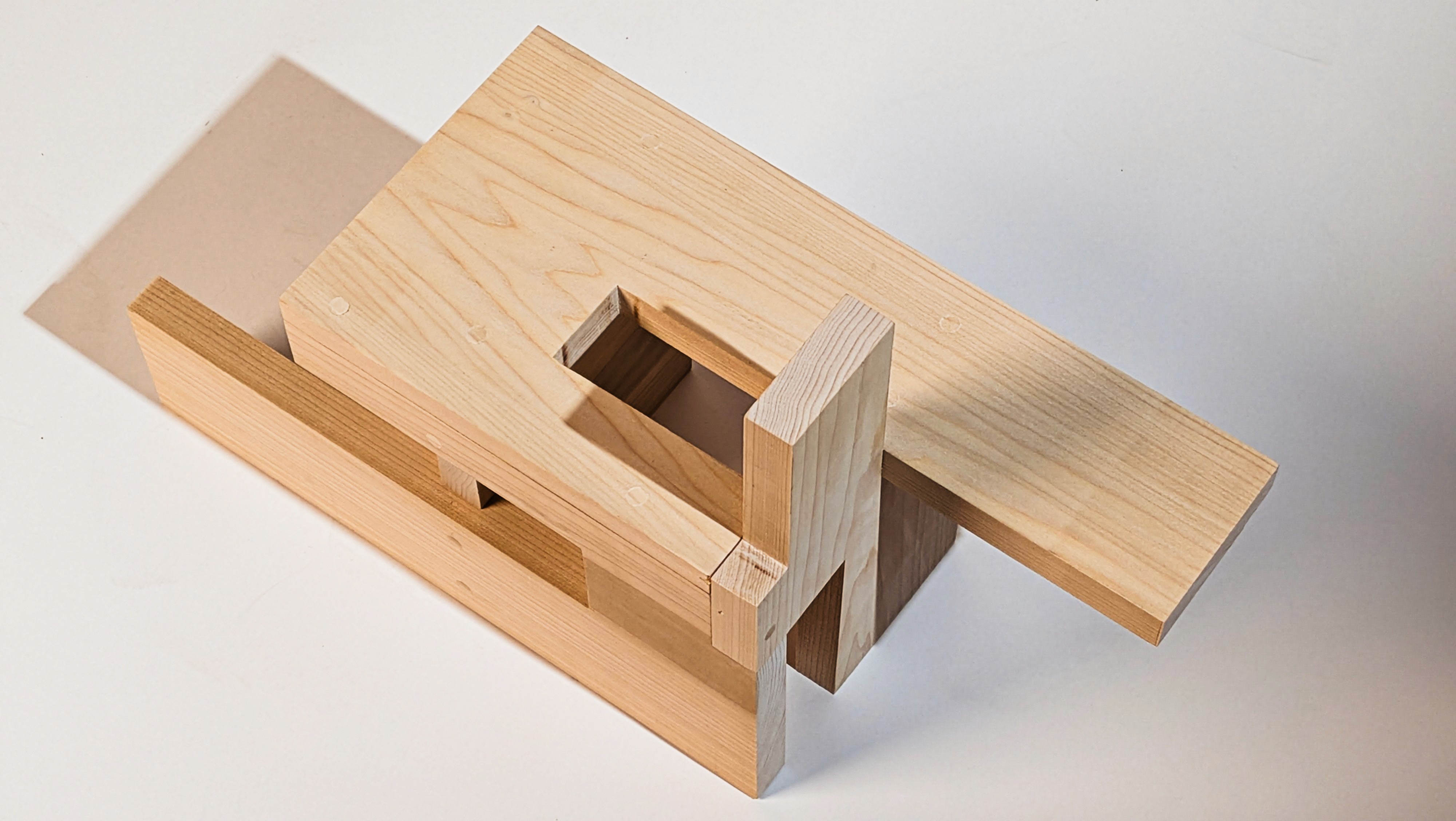
This project aims to explore the beauty and creativity that only shines through strict restrictions and limitations. Given a single piece of rough poplar lumber, I used the wood's dimensions and peculiarities to create a stool that was both usable and functional.
THE BRIEF
From a 8” by 60” by 1” length of poplar, design and construct a stool out of four rectilinear boards joined at right angles.
PROCESS
Prototyping
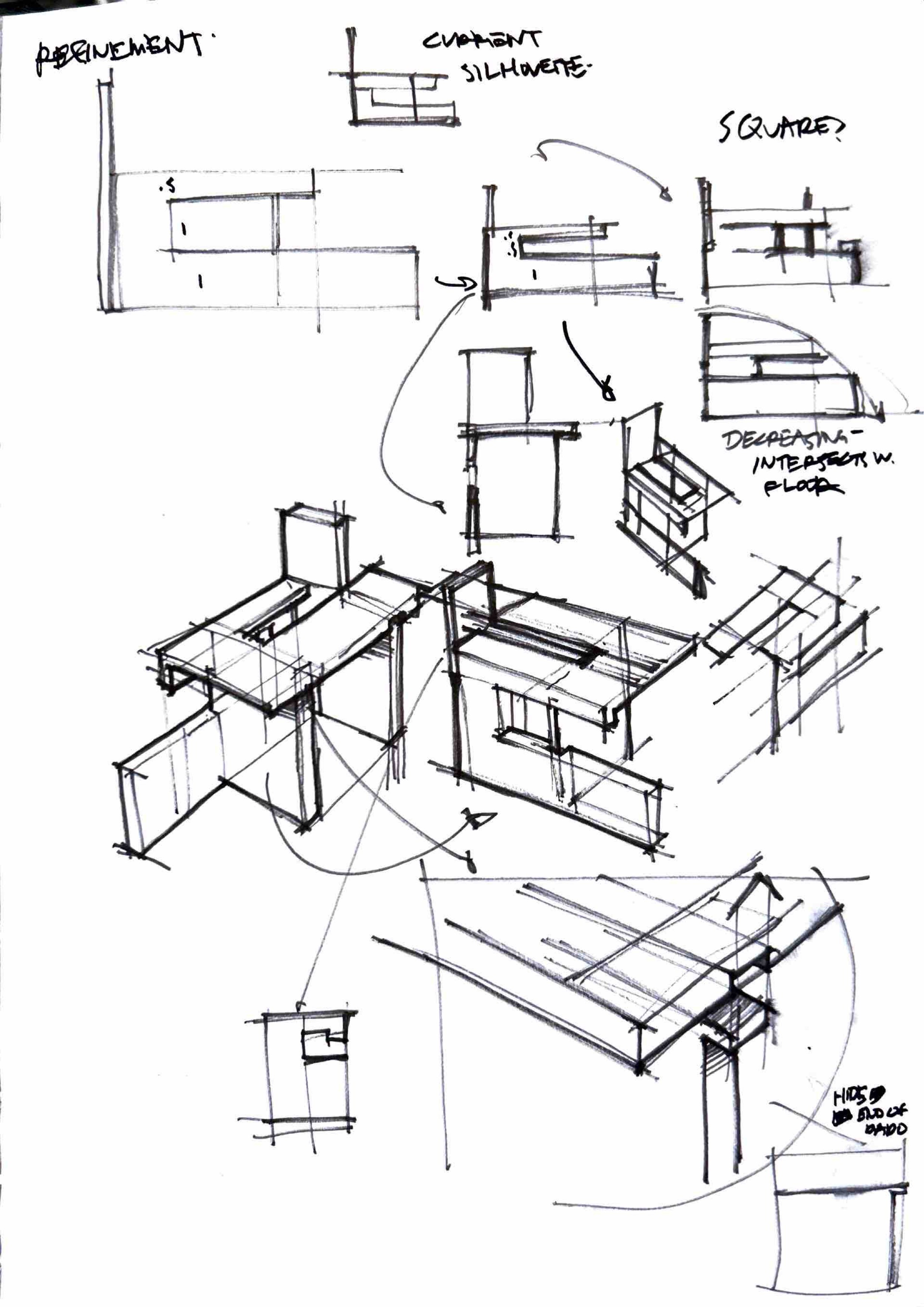
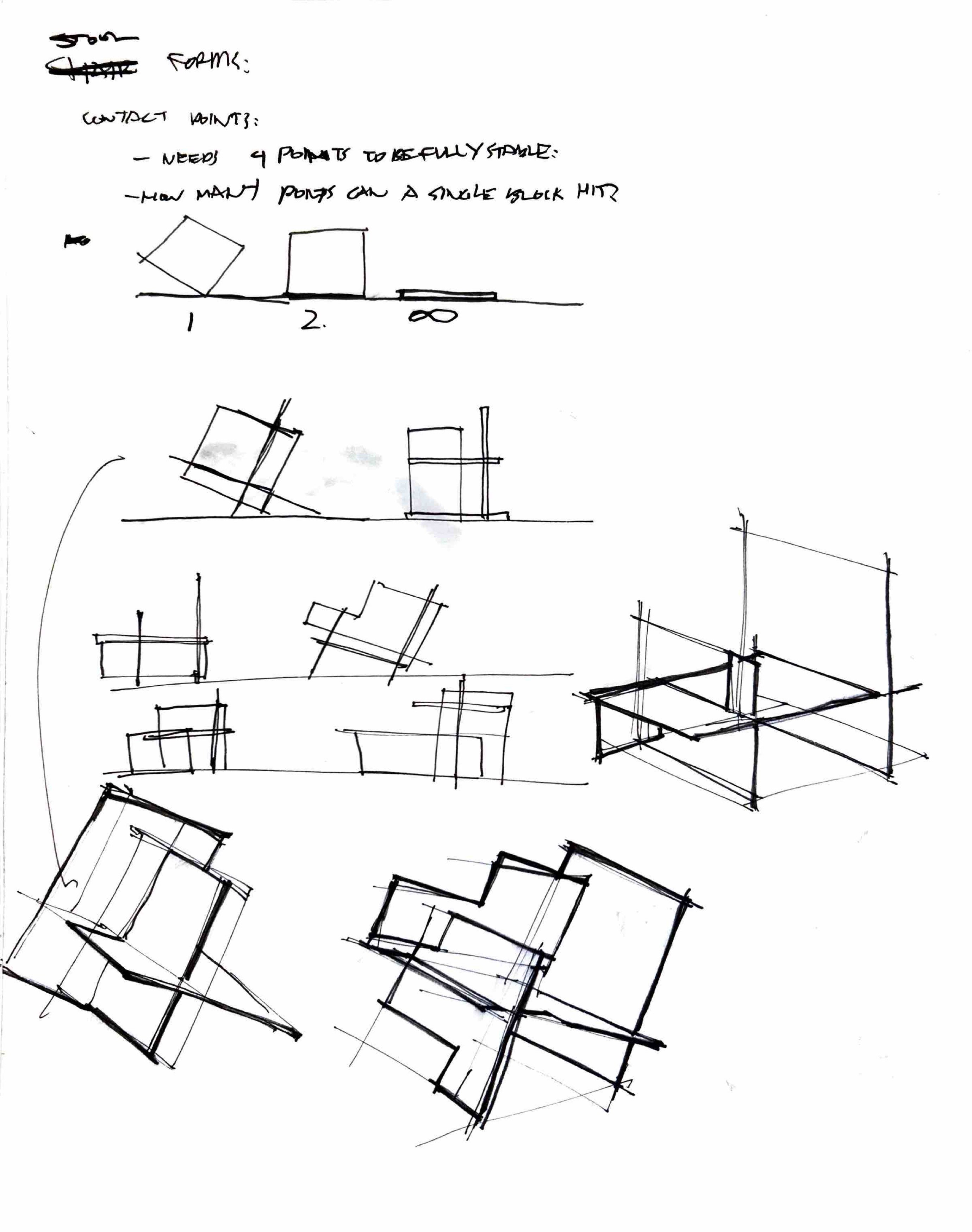
I started by exploring compositions through 1/4 scale foamcore prototypes and front/side view drawings.
Working with an 8" by 60" board meant I could either make my stool tall or long — not both. Additionally, the width of the board being 8" meant the length of the seat would have to be longer to avoid discomfort. I experimented with L-shaped boards in order to get more length out of each piece without sacrificing on durability.
Refinement
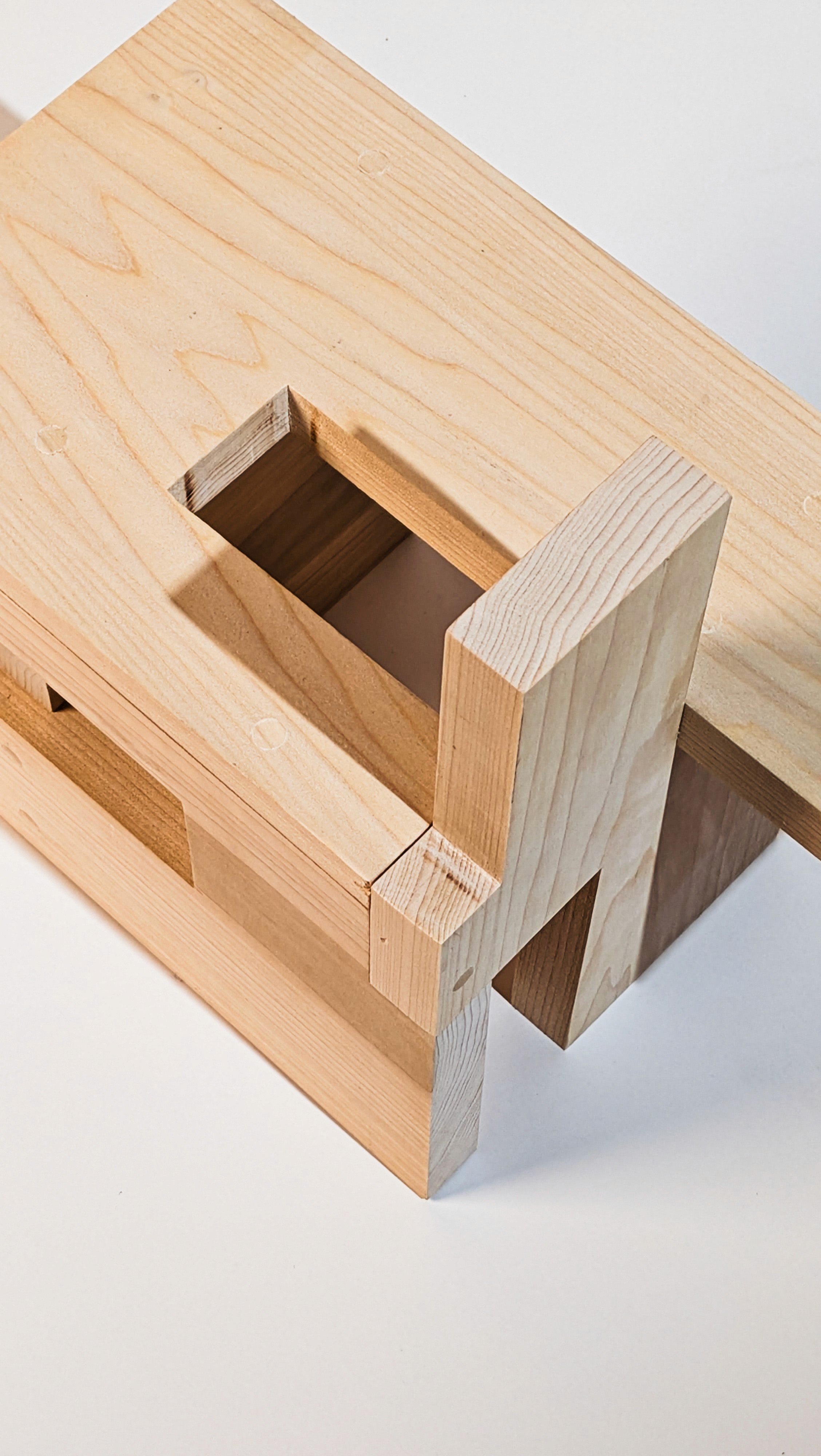
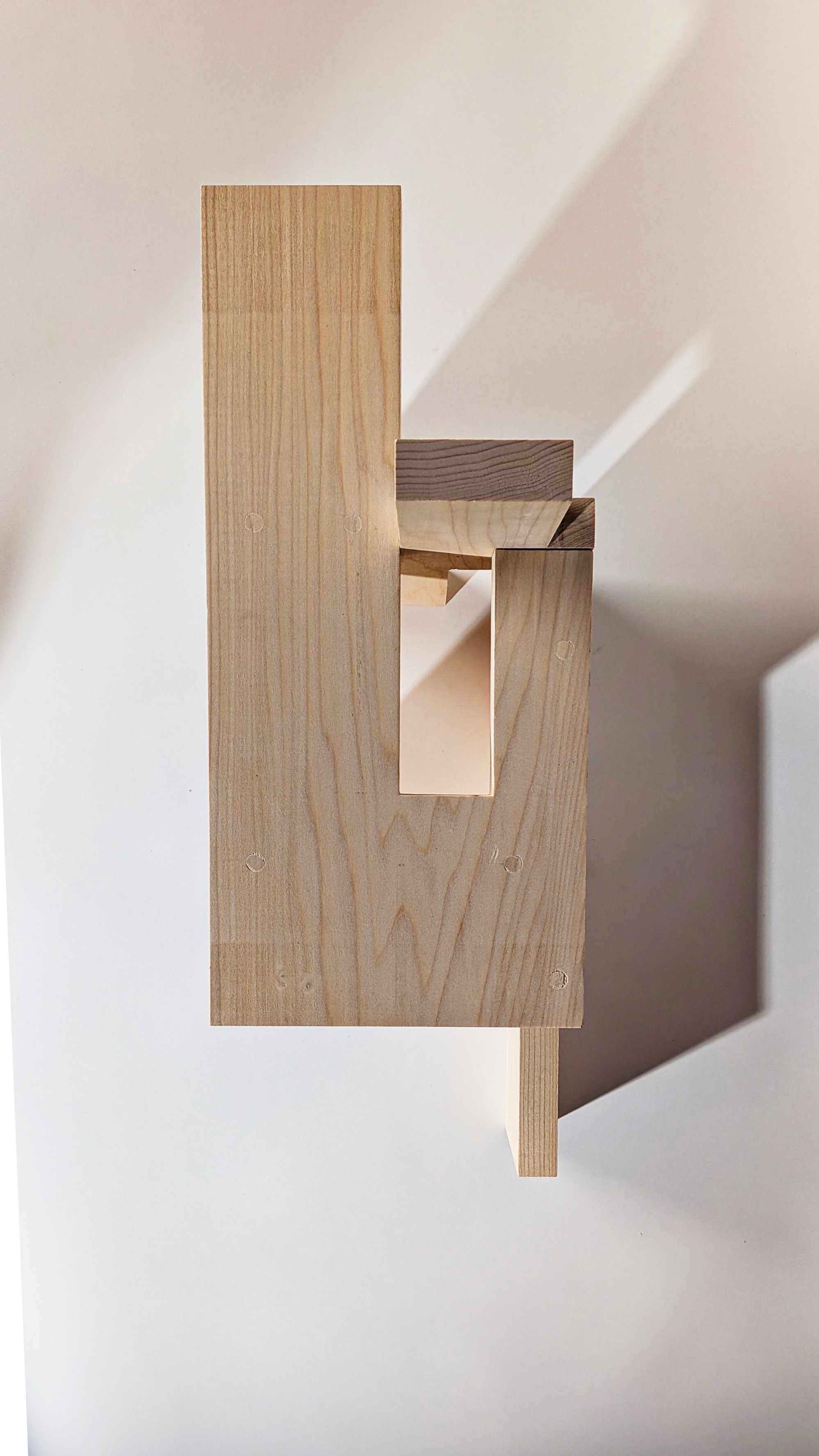
Inspired by wooden puzzles, I focused on creating a sense of intentional continuity in the intersections between each board, creating the illusion of a single piece. An s-curve snakes across the seat and down the base, eventually merging into the backboard.
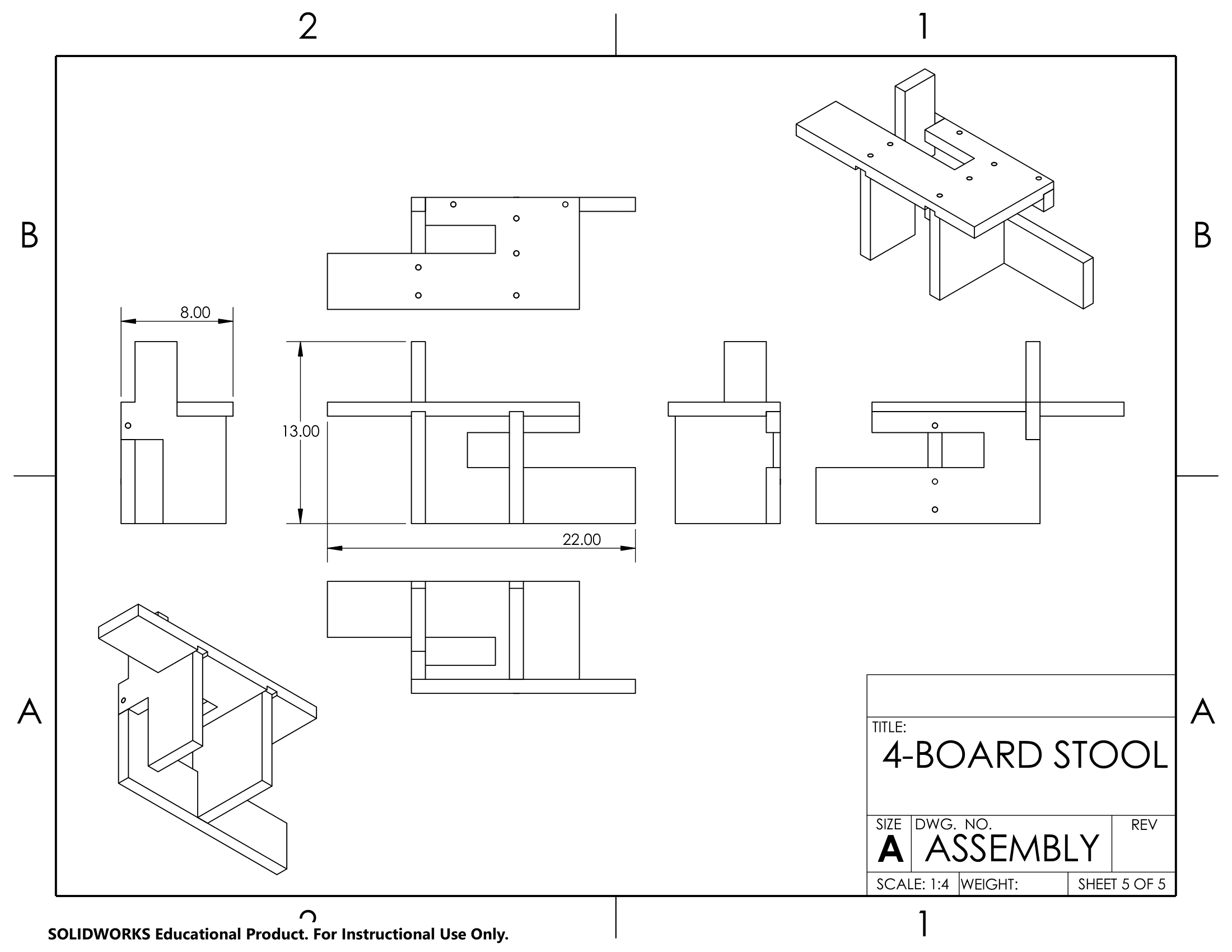
After testing the stability through a 1-to-1 scale cardboard model, I settled on the final dimensions on SolidWorks. The wood I received was on the smaller side, so I drastically simplified the backboard.
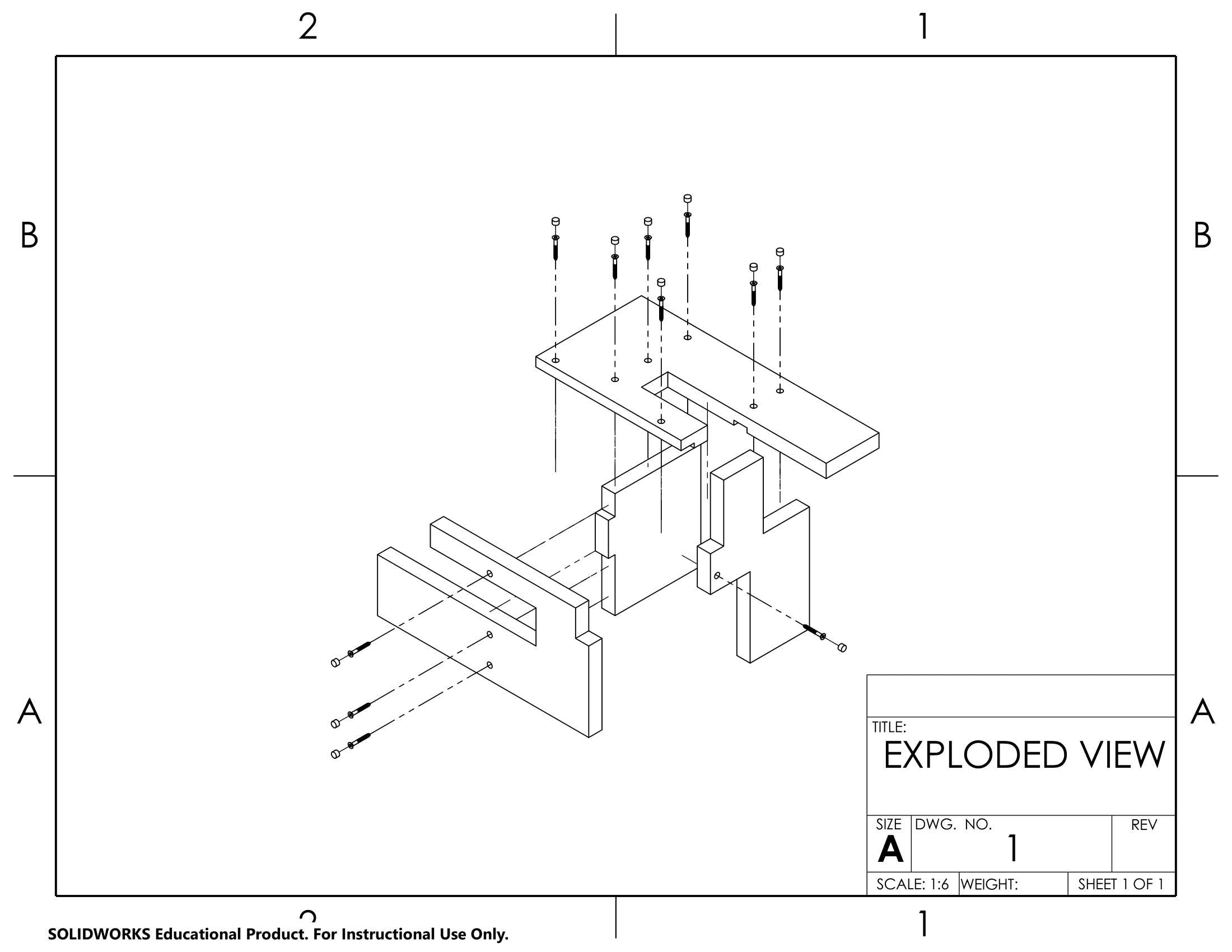
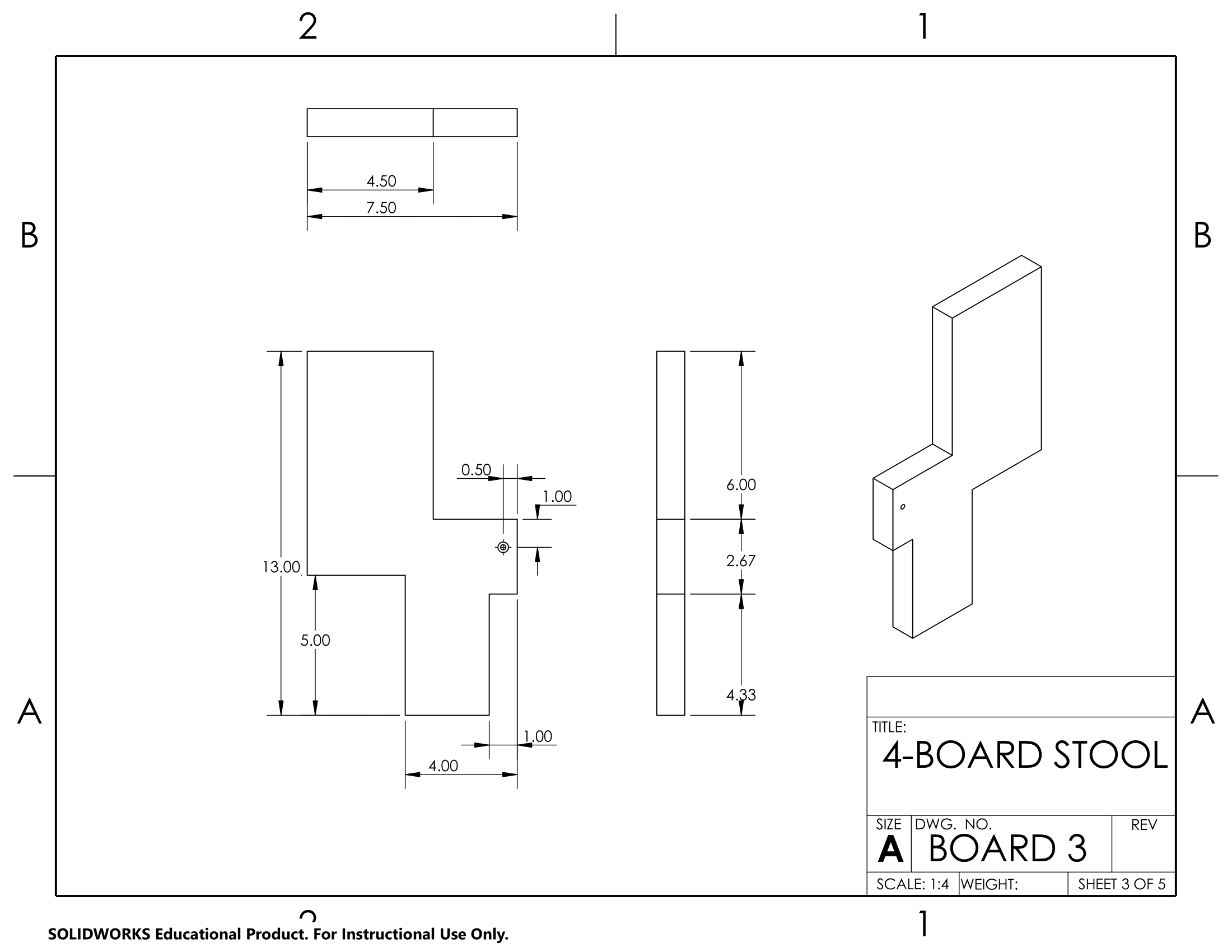
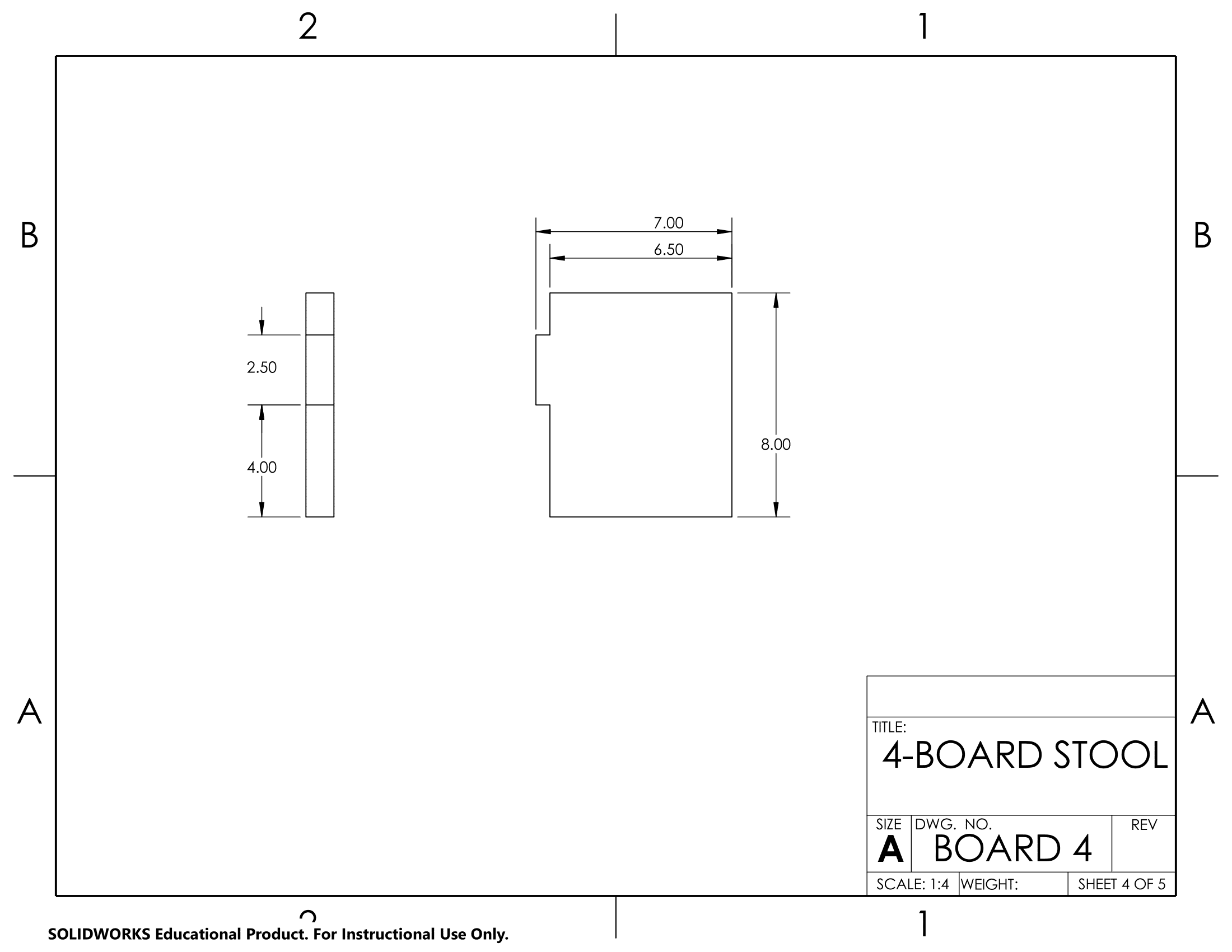
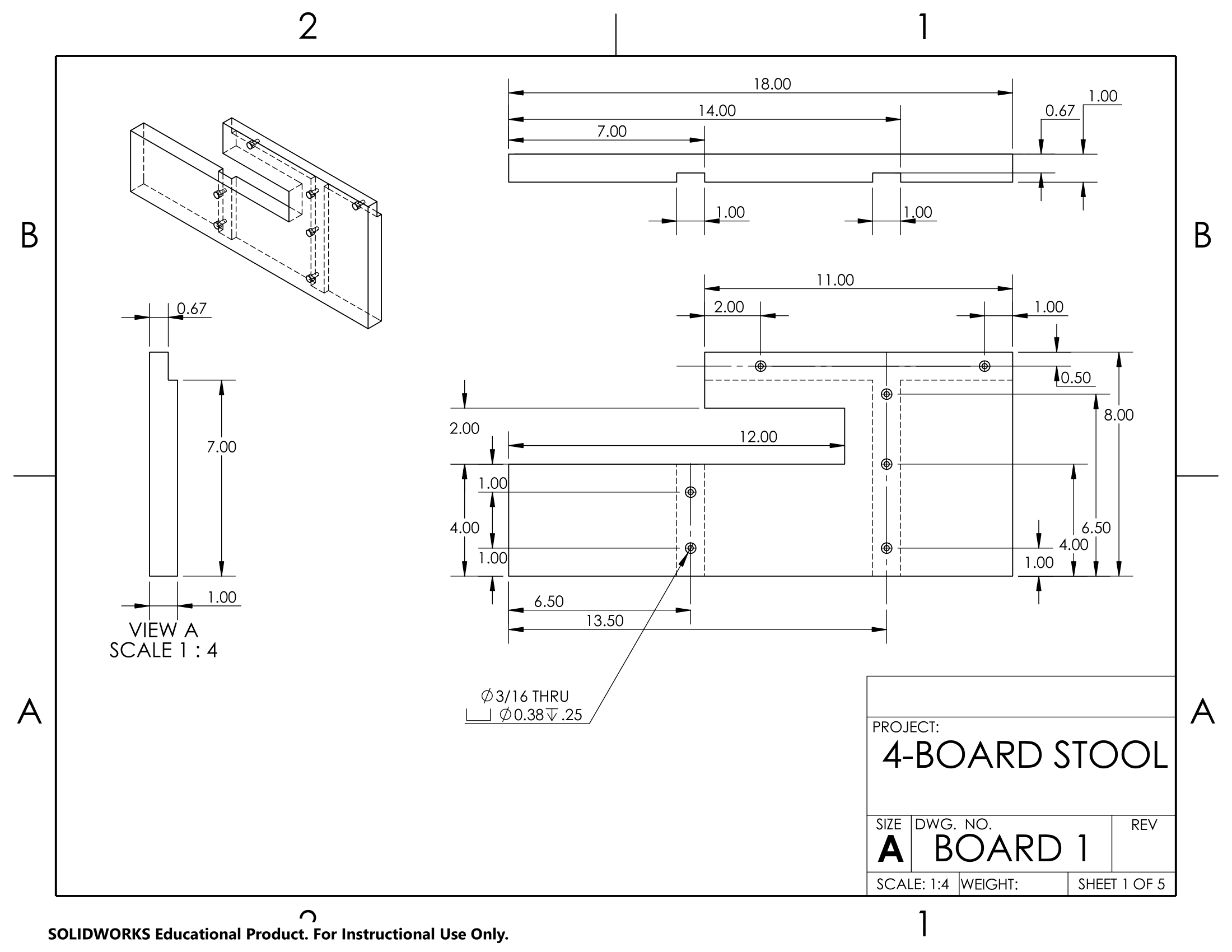
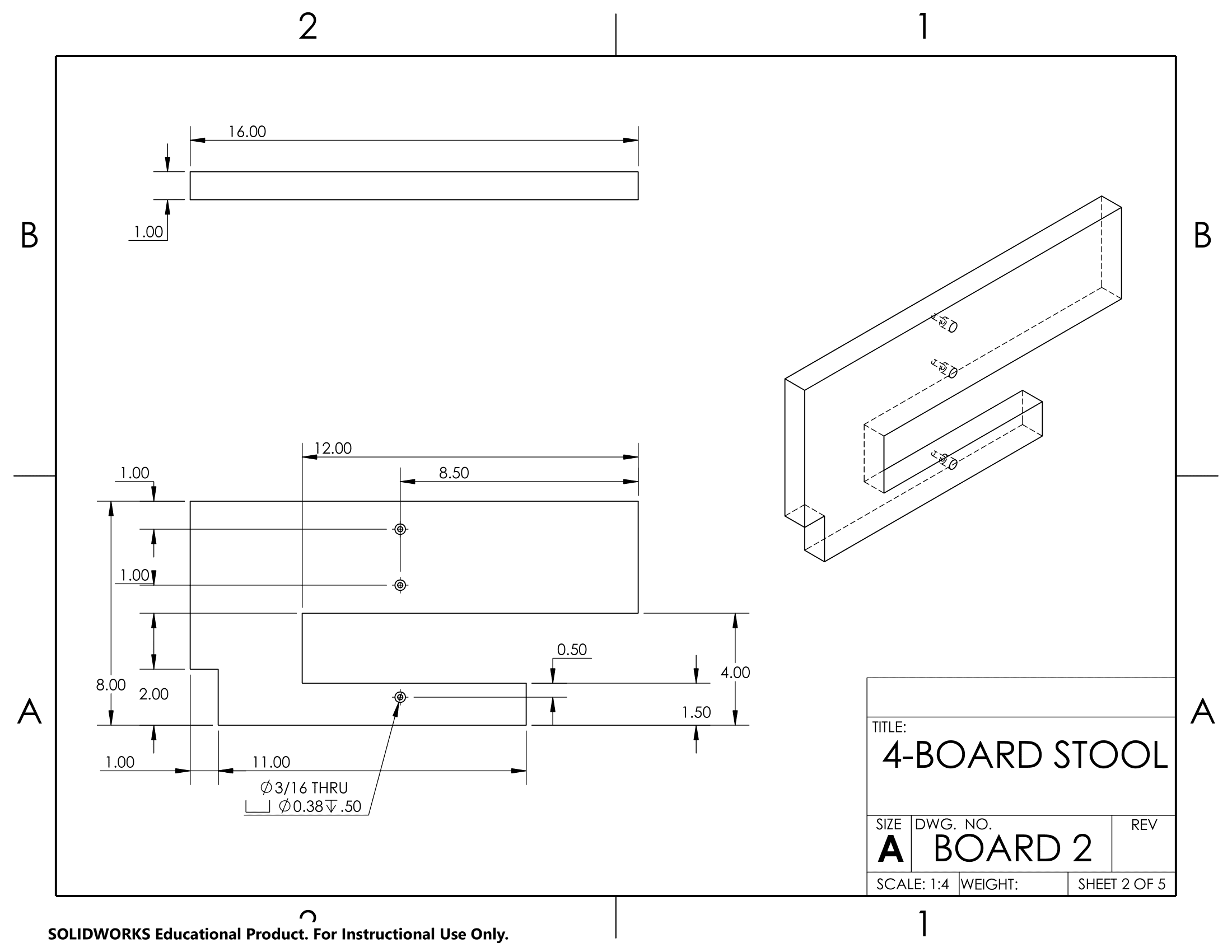
Sketchbook
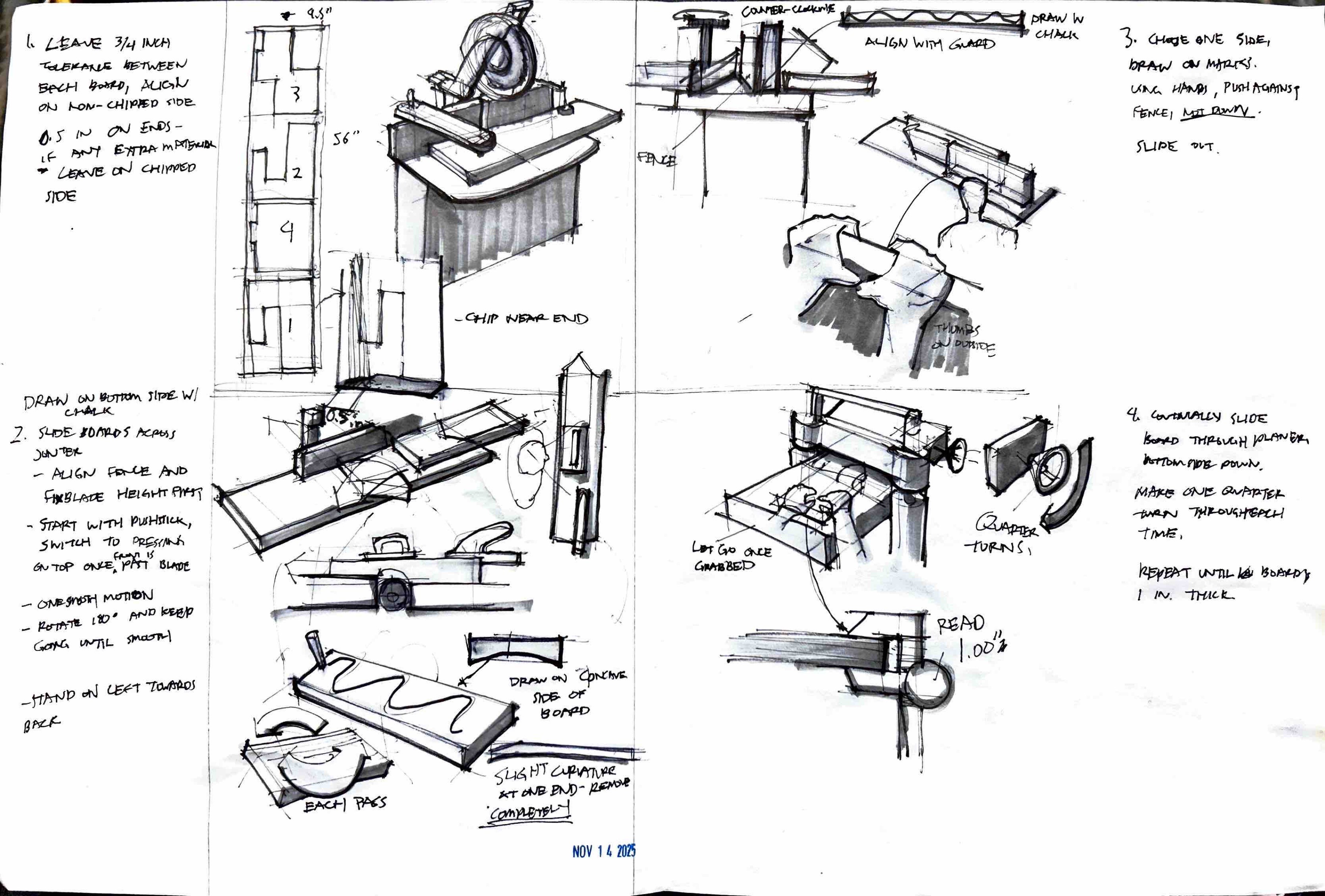
Shop sketches played an essential role in the manufacturing process, enabling me to transition from diagramming to production. They are quick but specific, highlighting the steps necessary to produce intended results.
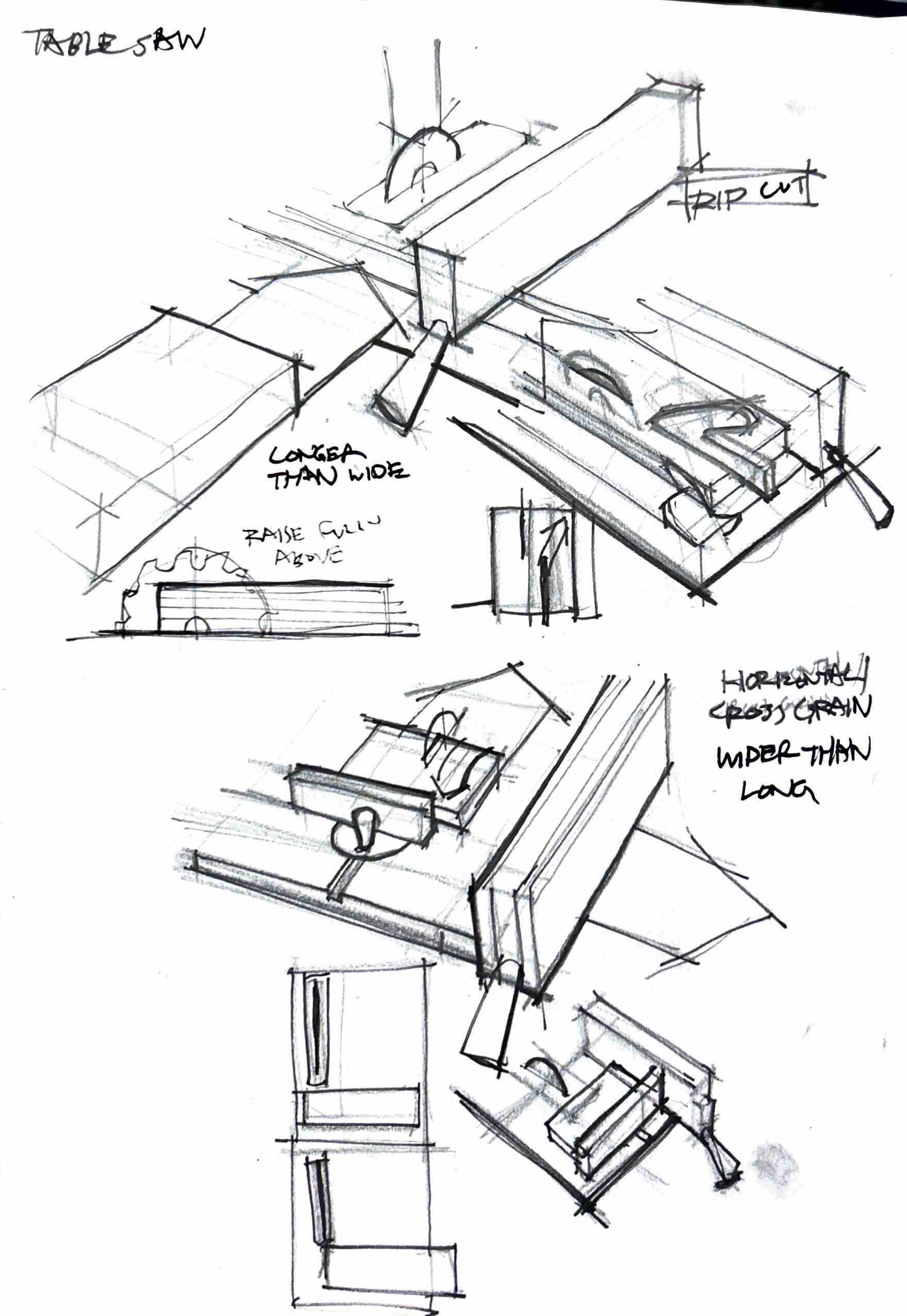
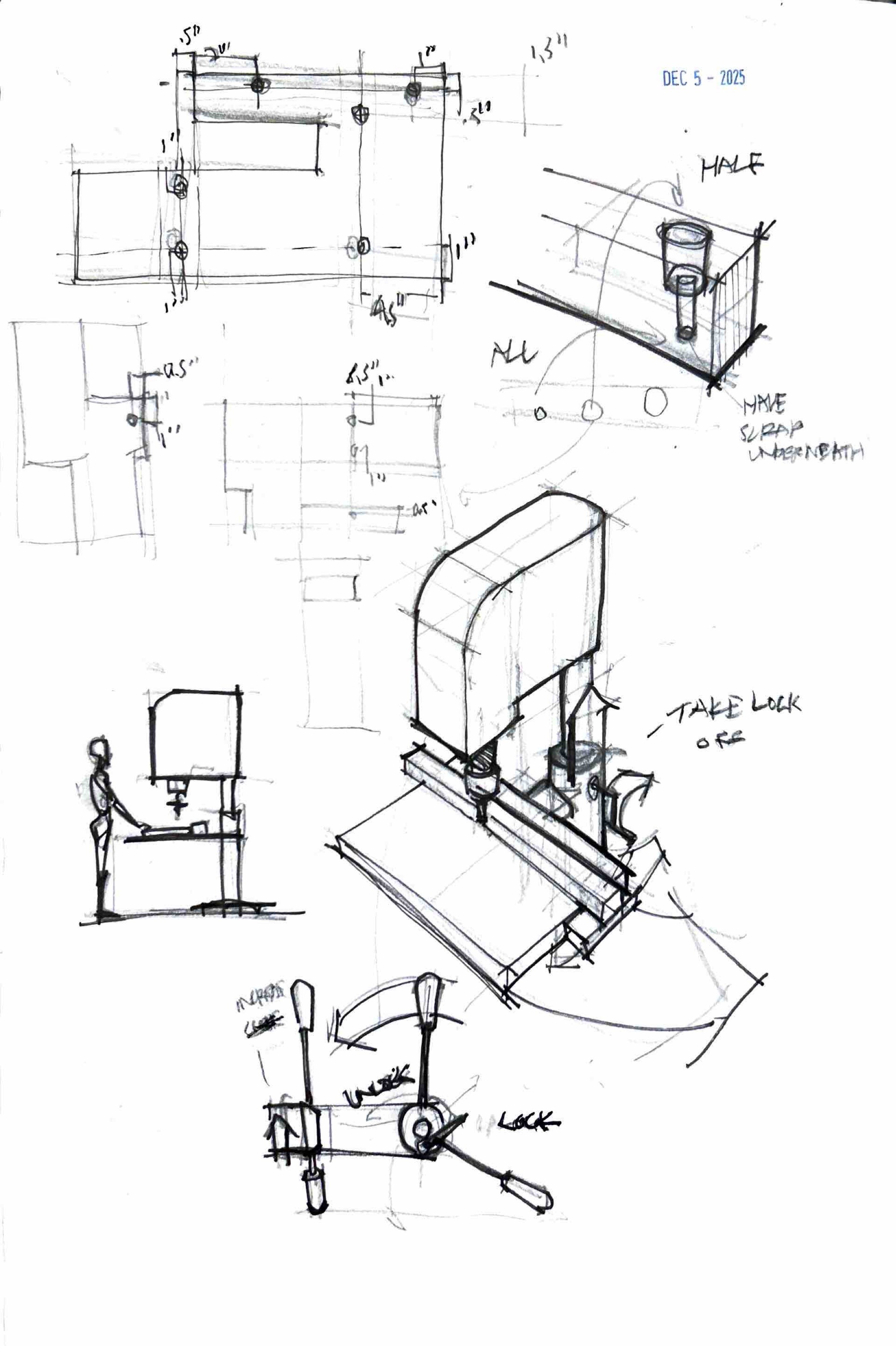
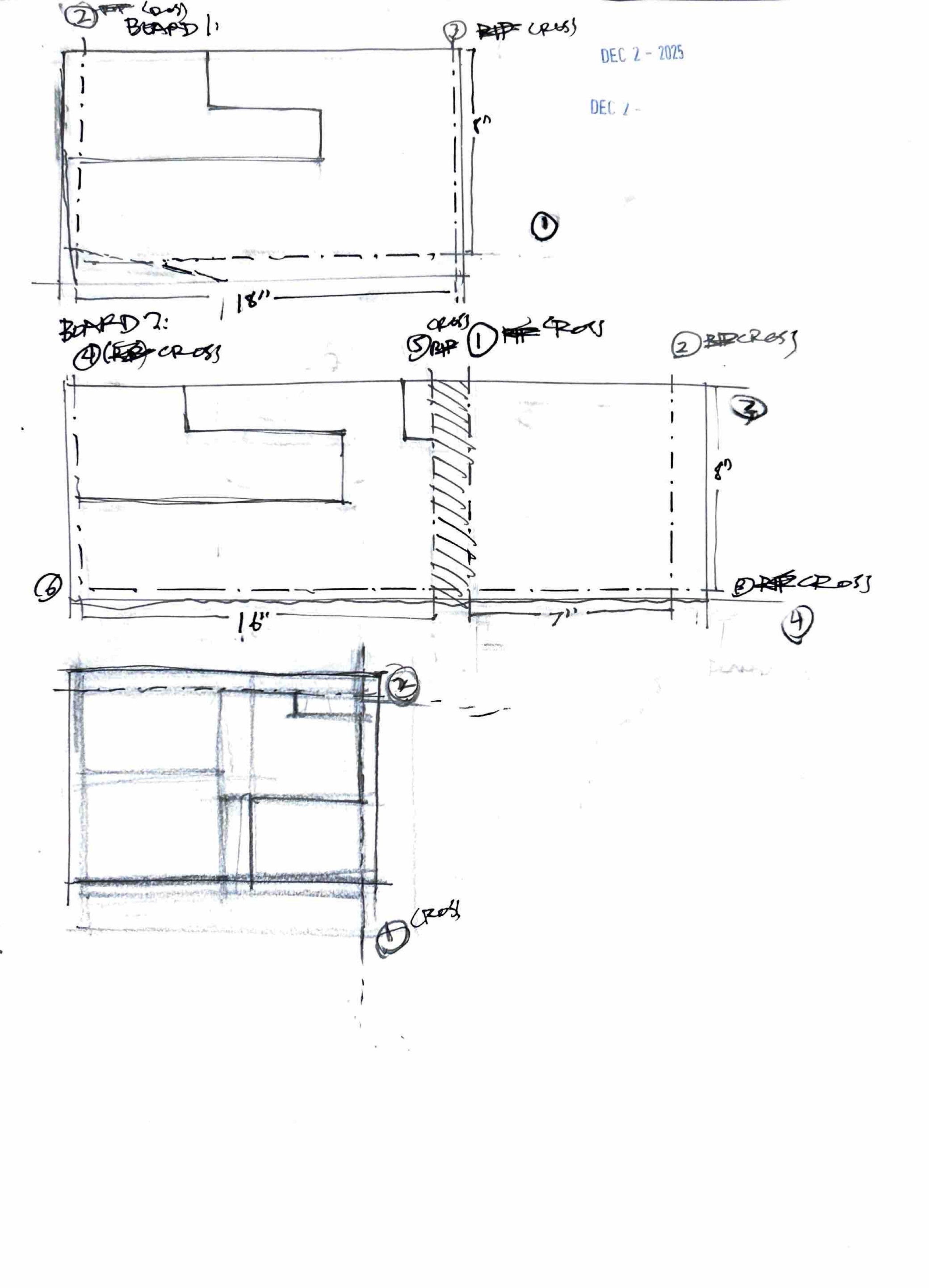
Machining
Throughout the course of the project, I gained experience with the bandsaw, chop saw, jointer, planer, router, and drill press.
Affordances + Interactions
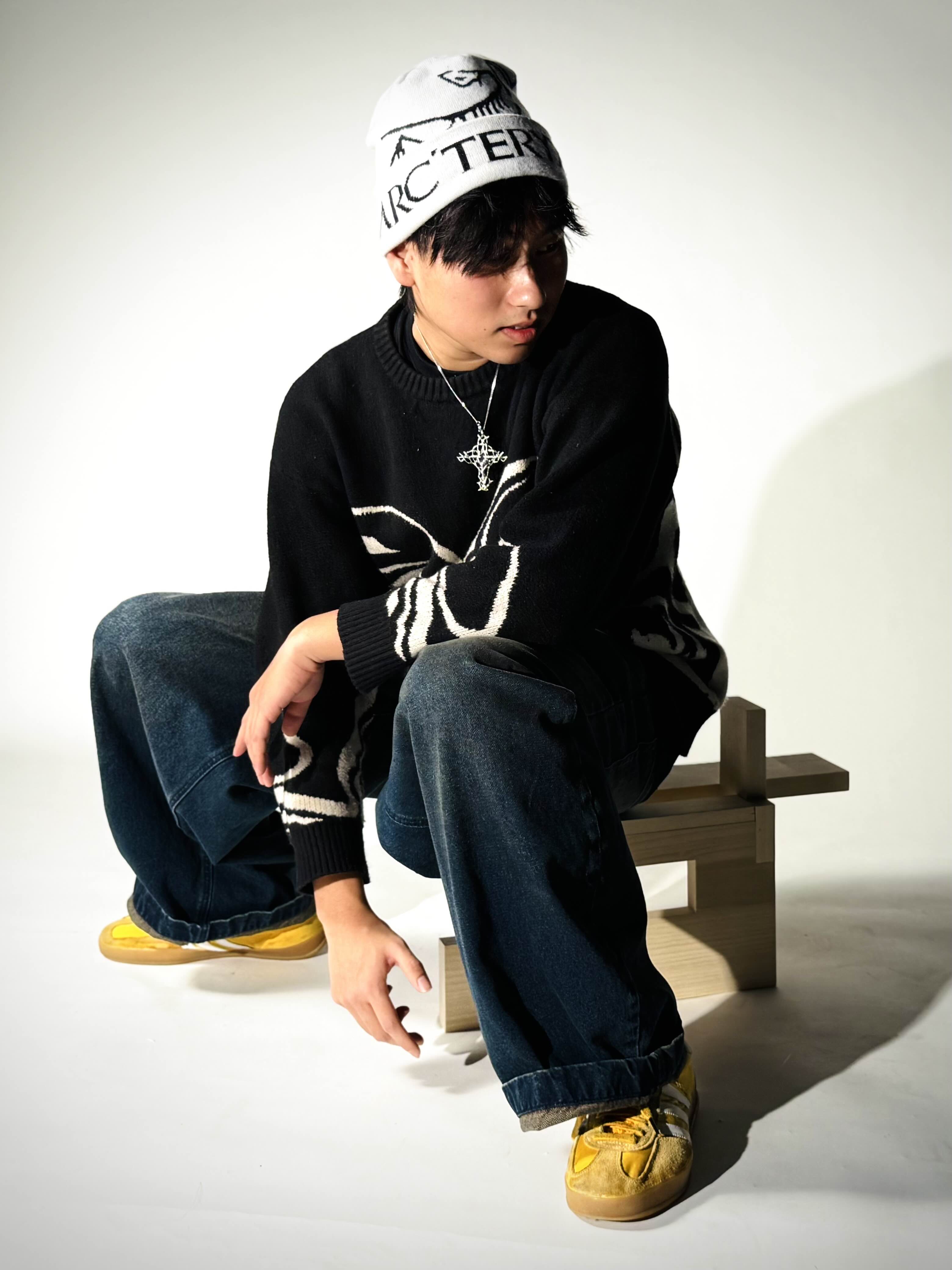
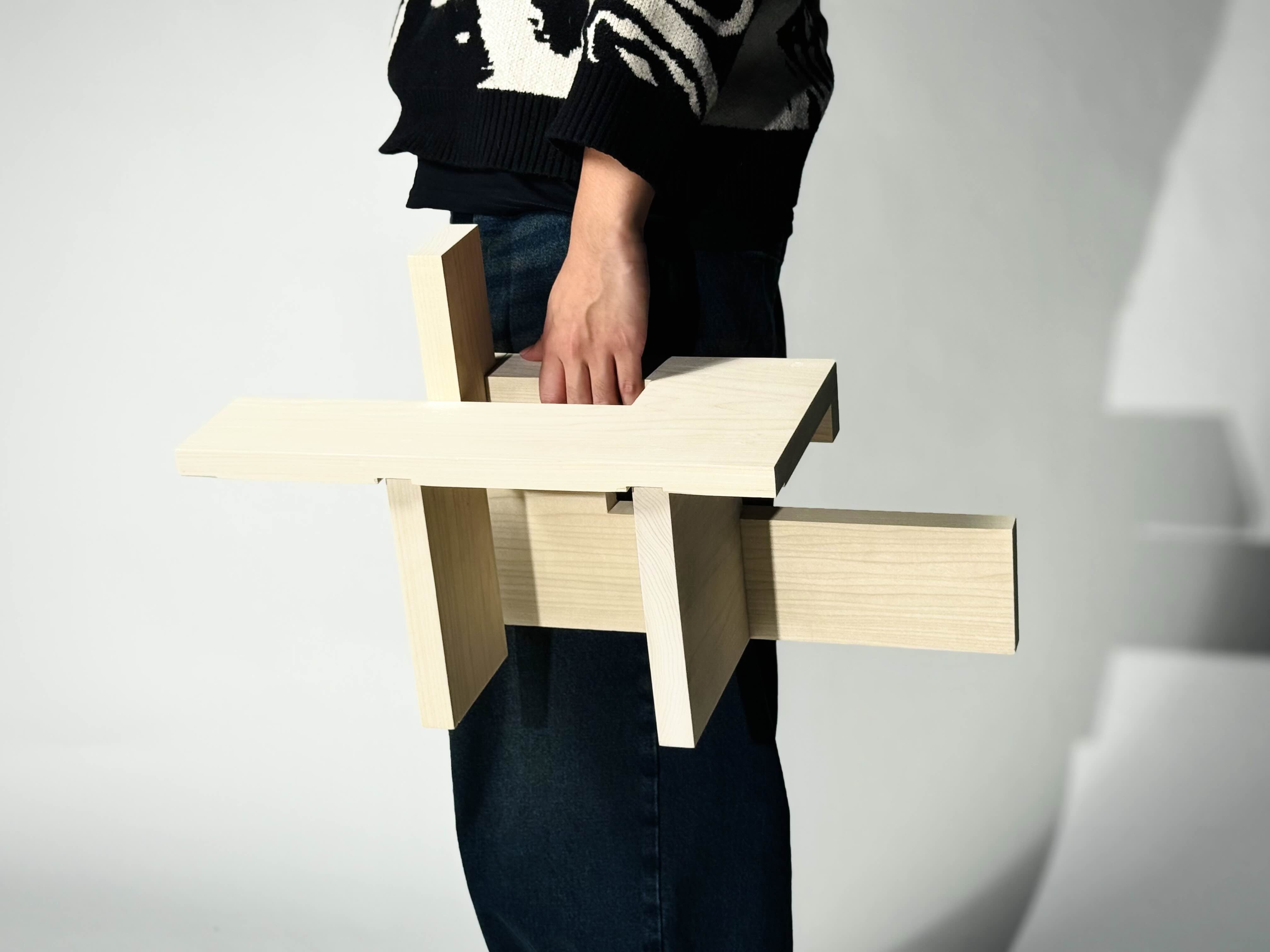
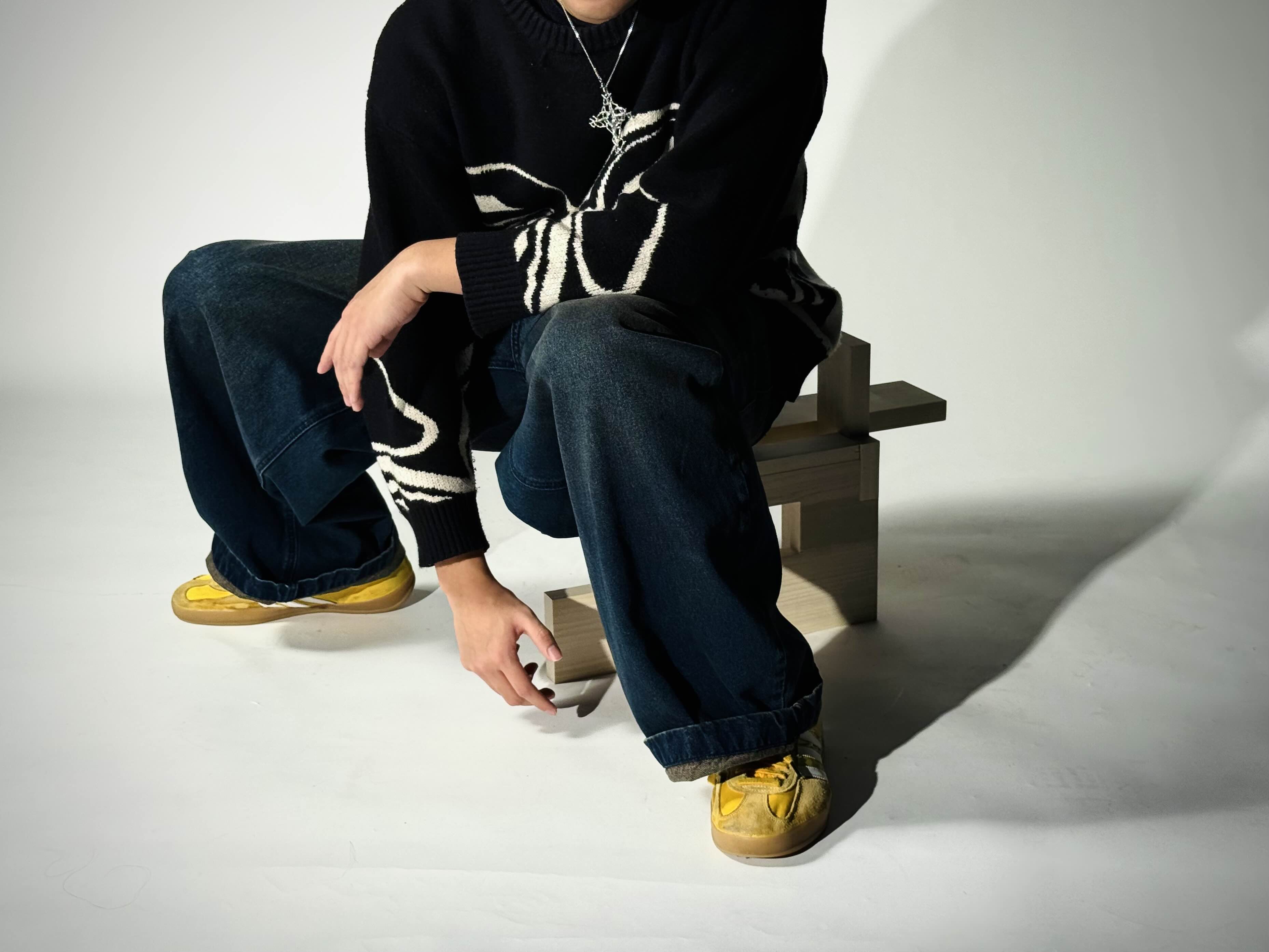
The stool's many loops suggest it is meant to be picked up and carried. Its horizontal nature encourages both forward leaning and sprawling.
REFLECTION
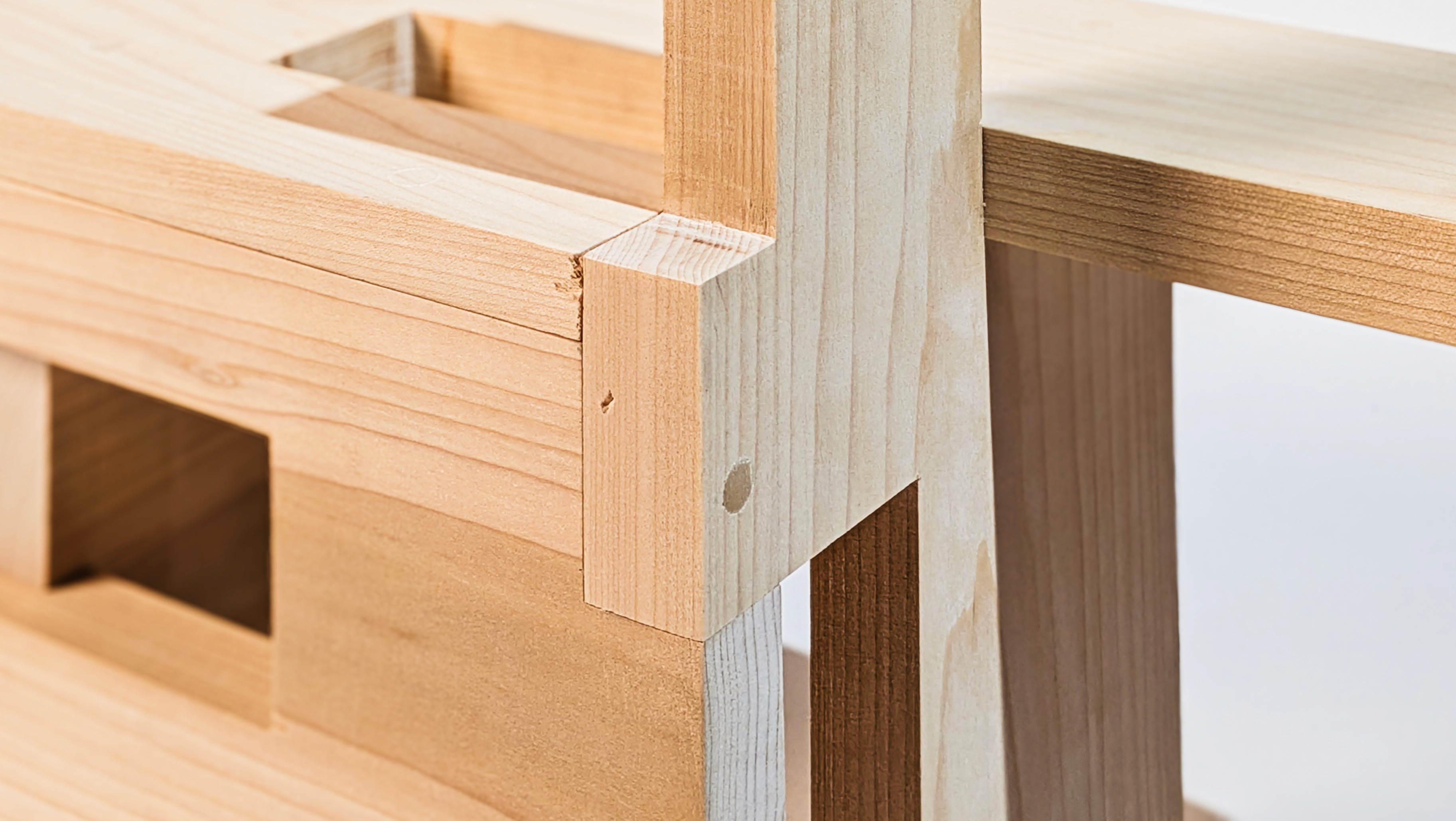
As my introduction to the machine shop, this project broadened my understandings of considerations for manufacturing and production. Details such as screw placement and joint types played a bigger role than I initially imagined, and gave me a greater respect for the intentionality behind each decision made in everyday objects. Decisions considering feasibility not just of idea, but of craft.
With more time, I would like to play with the proportions a bit more to get the stool slightly taller, and extend the backboard so it feels more thought out. Given the limited timeframe of the project, I am quite happy with how it turned out.
<- BUMBLE SWARMS
@Timothy Yang
ttimothyy24@gmail.com
YOU INTERESTED?